🚶 Private Walking Tour · Old Cairo · Coptic Quarter · Roman Babylon · Islamic Cairo · Egyptologist Guide
Old Cairo Walking Tour from Hurghada with Guide
📅 Updated: June 2026 | ⏱️ 20 min read | 💶 From €135 / person | ⭐ 4.9/5 rated | 🚶 Coptic Cairo · Roman Babylon · Islamic Quarter · Fustat
The Old Cairo walking tour from Hurghada with guide is the most intimate and layered experience available from Egypt’s Red Sea coast — a carefully paced, fully guided walk through the oldest inhabited quarter in one of the world’s most ancient cities. In a single morning walk through Old Cairo, you traverse 2,000 years of continuous human history: Roman fortifications, early Christian churches, medieval synagogues, Islamic mosques, and narrow lanes that have been walked by Roman soldiers, Coptic pilgrims, Arab conquerors, Crusader traders, and Ottoman scholars in an unbroken sequence from the 1st century BCE to the present day.
Old Cairo — known in antiquity as Babylon in Egypt and later as Fustat — is where the story of Cairo itself begins. Not the modern city, not the medieval city, but the deepest layer: the riverside settlement where the Roman garrison established Egypt’s most strategic garrison, where the Holy Family sheltered during the Flight into Egypt, where St. Mark’s Gospel reached Africa, where the Arab general Amr ibn al-As built Africa’s first mosque, and where the Coptic Orthodox Church — one of the oldest Christian communities on earth — has maintained its faith without interruption for nearly 2,000 years.
This guide presents the complete programme: every stop of the Old Cairo walking tour from hotel pickup to return transfer, with the full hour-by-hour itinerary, complete pricing breakdown, what is included and what to expect — the most comprehensive Old Cairo walking tour with guide available from Hurghada.
💡 Why walking matters in Old Cairo: Old Cairo is not a site you drive through — it is a neighbourhood you walk. The lanes between the churches are too narrow for vehicles. The atmosphere of the Coptic quarter — candle smoke from church interiors, the sound of Coptic chanting, the shade of ancient stone walls, the garden paths between the monuments — is entirely lost the moment you are sitting in a vehicle. This tour is specifically designed as a walking programme — with vehicle support for transfers between areas and complete Egyptologist narration at every step.
What Is Old Cairo? The Three Layers of 2,000 Years
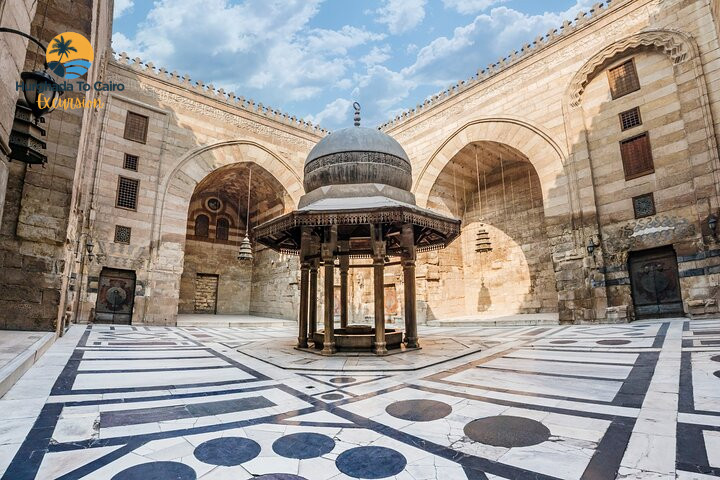
Old Cairo — known to scholars as Misr al-Qadima — is the ancient settlement on the eastern bank of the Nile, approximately 5 km south of central Cairo. It is one of the most historically layered urban sites on earth: a single neighbourhood where Roman, Jewish, Christian, and Islamic history are physically stacked upon each other, each era’s buildings rising from the foundations of the previous era, each community’s story intertwined with the others in a relationship that has been continuous for over 2,000 years.
🏰
Layer 1: Roman Babylon (~30 BCE)
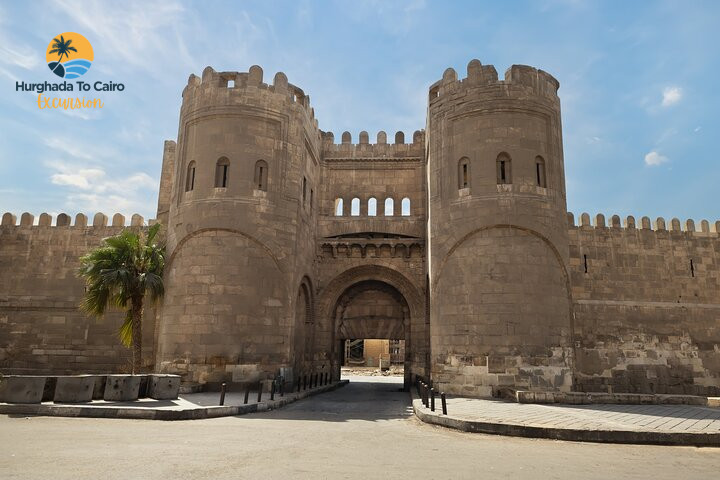
Emperor Augustus established the garrison of Babylon in Egypt at the strategic Nile crossing, on the route from Palestine to Upper Egypt. The fortification — with its massive round towers — defined the shape of the settlement for the next 2,000 years. Its remains are visible today beneath and around the Coptic churches.
✝️
Layer 2: Coptic Cairo (1st–7th century CE)
The Christian community that grew within and around the Roman fortress from the 1st century CE — building churches that have been in continuous use for 1,600–1,800 years, preserving the liturgy and language (Coptic) of ancient Egypt in Christian form. The Holy Family’s visit (~4 BCE), St. Mark’s mission (~42 CE), and the Diocletian persecutions all left their mark here.
🕌
Layer 3: Islamic Fustat (642 CE onwards)
When Arab general Amr ibn al-As conquered Egypt in 641–642 CE, he established Egypt’s first Islamic capital — Fustat — immediately adjacent to the Christian and Roman settlement of Babylon. Africa’s oldest mosque, built in 641 CE, stands minutes from the oldest Christian churches on the same site. Three great monotheistic traditions within a single city block.
💡 What makes Old Cairo unlike any other place on earth: In most historic cities, the layers of civilisation are separated — Roman sites in one district, medieval sites in another, modern development everywhere else. In Old Cairo, the Roman towers are visible at the base of a 6th-century Christian church. The synagogue stands 30 metres from a mosque built in 641 CE. You walk from a 3rd-century church into a 13th-century icon workshop into a 1st-century Roman gateway — all within the same 500-metre radius. This physical proximity of 2,000 years of human faith is what makes walking here — slowly, with a knowledgeable guide — one of the most remarkable urban experiences available anywhere in Egypt.
Why a Walking Tour Is the Only Way to Experience Old Cairo
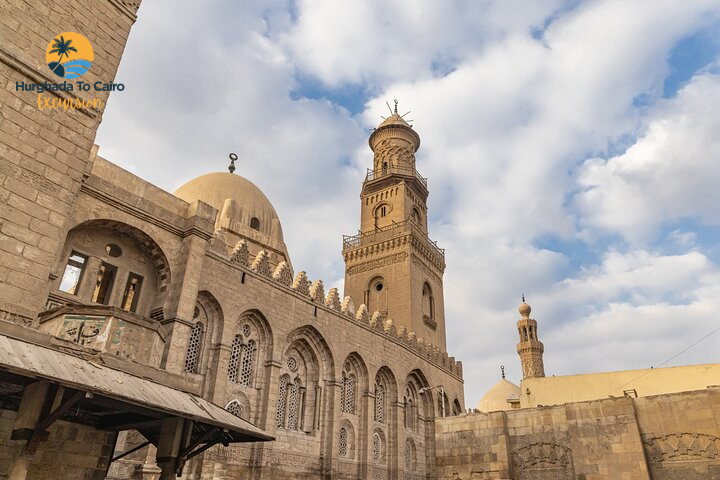
Many tours to Coptic Cairo drive visitors to the car park, rush them through two or three churches, and return to the vehicle within 90 minutes. The Old Cairo walking tour with guide is fundamentally different — structured to use the act of walking as the primary tool for understanding a place where the spaces between the buildings are as important as the buildings themselves.
🏘️
The Lanes Are Impassable by Vehicle
The ancient lanes of Old Cairo — between the Hanging Church, the Coptic Museum, the Church of Abu Serga, and the Ben Ezra Synagogue — are too narrow for any motor vehicle. They can only be experienced on foot. Walking them gives you the neighbourhood as it has existed for 1,000+ years: human scale, shaded stone, the sound of prayer through doorways.
🔍
Details Only Visible at Walking Pace
The Roman inscription re-used in the Hanging Church’s staircase. The glass floor panel revealing the Roman tower beneath your feet. The Arabic inscription on the Ben Ezra Synagogue explaining its medieval history. The 14th-century wooden mashrabiyya screen on the Church of St. Barbara. None of these are visible from a vehicle — all are pointed out by your guide at walking pace.
🕊️
The Atmosphere Requires Slow Movement
The candle smoke drifting from open church doorways. The sound of Coptic liturgy from a 3rd-century church interior. The garden of the Coptic Museum in morning light. The call to prayer from the Amr ibn al-As Mosque reaching across the ancient lane. All of this requires time, presence, and the unhurried pace that only a private walking tour with a guide provides.
🗺️
Connections Between Sites Are Physical
The Hanging Church is built above a Roman tower. The Church of Abu Serga is built over a crypt where tradition holds the Holy Family sheltered. The Ben Ezra Synagogue is 30 metres from the oldest church in Egypt. Walking the 50–100 metres between these sites — understanding the urban geography — makes the three-faith story of Old Cairo physically comprehensible in a way that a vehicle transfer never can.
12 Unmissable Stops on Your Old Cairo Walk
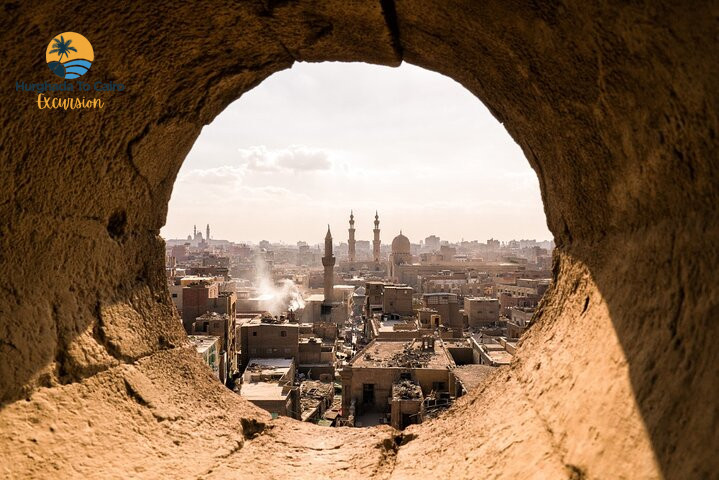
Your Old Cairo walking tour with guide visits every significant monument in the ancient quarter — on foot, in sequence, with full Egyptologist narration at each stop. Here is what you will see and why each stop matters.
🏰
Stop 1: Roman Fortress of Babylon — The Beginning
Start point of the walk. The surviving towers and walls of the Roman garrison established ~30 BCE — the oldest visible structure in Cairo. Your guide explains how this military installation determined the shape of everything built above and around it for the next 2,000 years. The two surviving towers (the “Water Gate” and the southern gateway) are accessible and photographed. Time: 15 minutes.
⛪
Stop 2: The Hanging Church (Al-Moallaqa) — 3rd–4th Century ⭐⭐⭐
The most famous church in Egypt — built over the Roman fortress’s southern gateway, its nave suspended above 2,000-year-old military engineering. Your guide shows you the glass floor panel revealing the Roman tower beneath your feet, explains the 13th-century ivory-inlaid iconostasis (finest Coptic decorative art in Egypt), the Noah’s Ark ceiling, the Judas-marble column, and the church’s role as the historic seat of the Coptic Pope. Time: 40 minutes.
🏛️
Stop 3: Coptic Museum — World’s Finest Early Christian Collection
The world’s greatest collection of Coptic art — 16,000 objects spanning 1st–13th centuries. Your guide focuses on three things: the Pharaonic-Christian visual transition (Ankh → Coptic cross; Isis nursing Horus → Virgin and Child), the Nag Hammadi Gnostic Gospel manuscripts (4th-century texts that transformed understanding of early Christianity), and the extraordinary 4th-century Coptic textiles still vivid with original colour. Time: 50 minutes.
🕊️
Stop 4: Church of St. Sergius & Bacchus (Abu Serga) — Holy Family Crypt ⭐⭐⭐
Built over the crypt where Coptic tradition holds the Holy Family (Mary, Joseph, and the infant Jesus) rested during their Flight into Egypt. The crypt is partially flooded by the rising Nile water table — accessed via stone steps, lit by candlelight, worn smooth by 1,700 years of pilgrimage. Your guide presents the biblical account (Matthew 2:13–15), the Coptic tradition, and the historical evidence. Regardless of personal faith, the atmosphere of this place is profoundly affecting. Time: 25 minutes.
✝️
Stop 5: Church of St. Barbara — Martyrdom & Masterwork
Dedicated to a 3rd-century martyr from the Diocletian persecutions, the Church of St. Barbara contains a remarkable 13th-century wooden iconostasis inlaid with ivory — the second finest example of Coptic decorative woodwork after the Hanging Church. The church also contains relics venerated as belonging to St. Barbara herself. Your guide explains the theology of martyrdom in the Coptic tradition and the historical context of the Diocletian persecutions. Time: 20 minutes.
🕍
Stop 6: Ben Ezra Synagogue & the Cairo Geniza ⭐⭐
One of Egypt’s oldest synagogues — and the site of the most extraordinary documentary discovery in Jewish history: the Cairo Geniza (1896), a cache of 300,000 manuscript fragments spanning 1,000 years of Jewish life, including the oldest known Hebrew Bible. Your guide tells the full Geniza story — the scholar Solomon Schechter who discovered it, the fragments now in Cambridge and dozens of other institutions, and what they reveal about the Jewish community of medieval Cairo. Open to all faiths. Time: 20 minutes.
🌿
Stop 7: Coptic Quarter Garden Walk — The Lanes Between
The shaded garden lanes connecting the monuments of Old Cairo are among the most peaceful urban spaces in the city — palm-tree lined paths, ancient stone walls, the occasional cross or Arabic inscription marking a doorway, the distant sound of liturgy from an open church. Your guide walks you deliberately slowly through these connecting passages — explaining how the neighbourhood functions as a living community, not merely an archaeological site. Time: 15 minutes.
🏛️
Stop 8: Church of the Virgin Mary (Babylon El-Darag) — 6th Century
One of Old Cairo’s oldest active churches — its interior features columns repurposed from ancient Egyptian temples, visible evidence of the continuous recycling of sacred materials across faiths and eras. Your guide highlights the Pharaonic lotus-capital columns now supporting a 6th-century Christian nave, and explains the architectural theology of reuse that runs through all of Old Cairo’s buildings. Time: 15 minutes.
🕌
Stop 9: Mosque of Amr ibn al-As — Africa’s Oldest Mosque (641 CE) ⭐⭐
Built by the Arab general Amr ibn al-As in 641–642 CE — the first mosque built in Africa and the third-oldest mosque in the world. Your guide explains the Arab conquest of Egypt, the founding of Fustat as Egypt’s first Islamic capital on the same site as Roman Babylon, and what the mosque’s centuries of reconstruction and expansion reveal about Islamic Cairo’s evolving relationship with its pre-Islamic heritage. Open to non-Muslim visitors outside prayer times. Time: 20 minutes.
🏺
Stop 10: Fustat Archaeological Park — Egypt’s First Islamic Capital
The archaeological remains of Fustat — Egypt’s first Islamic capital, established 642 CE, burned during the Crusades (1168 CE) to prevent capture — stretch across the area south of the mosque. Your guide navigates the visible remains of medieval Islamic urban life: the ceramic kilns, the water distribution system, the household foundations. A layer of city history that predates Islamic Cairo (founded 969 CE) by 300 years. Time: 15 minutes.
☕
Stop 11: Traditional Egyptian Tea Break — Local Café
A natural mid-walk pause at a local café or tea house in the neighbourhood — Egyptian mint tea or cardamom coffee, fresh bread and cheese, a chance to absorb and reflect. Your guide continues the narrative in conversation over tea — answering questions, connecting stories, explaining what comes next. One of the most genuinely relaxed and enjoyable moments of the day. Time: 20 minutes.
🍽️
Stop 12: Traditional Lunch — Old Cairo Area
The walk concludes with lunch at a quality local restaurant — traditional Egyptian mezze, grilled meats, koshary, fresh bread, cold drinks. Your guide selects on food quality, not commission. Vegetarian, halal, and child-friendly options always available. Included in tour price. The ideal conclusion to a morning of extraordinary depth.
Complete Itinerary — From Hotel Pickup to Return Transfer
The complete hour-by-hour programme for your Old Cairo walking tour from Hurghada with guide — from the moment your vehicle arrives at your hotel to the moment it drops you back at your Hurghada door.
🚗
04:00 – 05:00 AM
Private Hotel Pickup — Hurghada, Marsa Alam & El Quseir
Your private, air-conditioned vehicle arrives at your hotel lobby. Pickup times: Central Hurghada 04:00 AM · El Gouna 04:20 AM · Sahl Hasheesh 04:30 AM · Makadi Bay 04:45 AM · Soma Bay 05:00 AM · Marsa Alam 02:30 AM · El Quseir 03:00 AM (contact us for custom pickup from Red Sea south coast hotels). Your licensed Egyptologist guide joins you from pickup — beginning the historical briefing during the drive: the founding of Roman Babylon, the arrival of Christianity in Egypt, the Coptic Church’s 2,000-year survival, and the physical geography of what you are about to walk. Bottled water and USB charging throughout the vehicle.
⛰️
04:00 – 08:30 AM
Hurghada to Old Cairo — Private Transfer (~460 km)
The drive covers approximately 460 km via the Cairo–Suez desert motorway — 4.5 hours in a modern, comfortable vehicle. The guide’s pre-walk briefing during the drive covers the Coptic Church’s founding by St. Mark (~42 CE), the Diocletian persecutions (284–305 CE) that defined the Coptic calendar, the Council of Chalcedon split (451 CE) that separated the Coptic Church from Rome and Constantinople, and the Arab conquest of Egypt (641–642 CE) that transformed the neighbourhood from a Roman-Christian settlement to a multi-faith urban quarter. Comfort stops at modern motorway service stations.
🏰
08:30 – 08:50 AM
Arrival at Old Cairo — Walk Orientation
Your vehicle parks at the designated Old Cairo visitor point. Before beginning the walk, your guide gives a 5-minute orientation — showing you the map of the route, pointing out the sequence of stops, and explaining the three-layer structure (Roman, Coptic, Islamic) that you will trace on foot. This brief orientation ensures every monument you subsequently encounter is understood in its correct historical and geographical context.
🏛️
08:50 – 09:05 AM
Roman Fortress of Babylon — Walk Begins (Layer 1)
The walk begins at the surviving towers of the Roman Fortress of Babylon (~30 BCE) — the oldest visible structure in Cairo. Your guide stands you in front of the Water Gate tower (the best-preserved Roman military construction visible at street level) and explains how the Roman garrison’s location — at the Nile crossing between Palestine and Upper Egypt — made this the most strategic military position in North Africa. This 15-minute introduction establishes Layer 1 and sets the context for everything above it.
⛪
09:05 – 09:45 AM
The Hanging Church (Al-Moallaqa) — 40-Minute Guided Interior ⭐⭐⭐
40 minutes inside the most famous church in Egypt. Your guide walks you up the external staircase (built above the Roman towers), through the entrance, and into the nave — explaining the 13th-century ivory-inlaid iconostasis (the finest Coptic decorative art in existence), the ceiling shaped like Noah’s Ark, the 29 marble columns each representing an Apostle (one dark-veined marble representing Judas Iscariot), the glass floor panel showing the Roman tower directly beneath your feet, and the collection of icons spanning 1,500 years. The atmosphere inside — early morning, quiet, incense traces from the previous day’s service — is extraordinary.
🏛️
09:45 – 10:35 AM
Coptic Museum — 50-Minute Guided Collection Tour ⭐⭐
50 minutes in the Coptic Museum — one of the most surprising and underrated museums in Egypt. Your guide moves through the collection with focus: the Pharaonic-to-Christian visual transition (demonstrating how Egyptian religious imagery was transformed into Christian iconography), the Nag Hammadi Library manuscripts (Gnostic Gospels discovered in Upper Egypt in 1945, brought here for preservation), the Byzantine-era icon panels (some of the oldest surviving Christian icons in existence), and the extraordinary 4th–8th century textiles that bridge the artistic tradition of ancient Egypt with the medieval Christian world. This is not a passive museum visit — your guide makes the collection personally relevant and intellectually fascinating.
🌿
10:35 – 10:50 AM
The Coptic Quarter Garden Walk — 15 Minutes On Foot
Walking from the Coptic Museum toward the Church of Abu Serga through the ancient lanes of the Coptic quarter. Your guide points out the architectural details visible only at walking pace: a carved Coptic cross above a doorway dated to the 8th century, a Roman column re-used in a later building wall, the characteristic mashrabiyya wooden screens that ventilate older buildings. The guide also explains the Coptic community’s social organisation — the patriarchate, the deacons, the charitable institutions that still function in these lanes.
✝️
10:50 – 11:15 AM
Church of St. Sergius & Bacchus — Holy Family Crypt ⭐⭐⭐
The most sacred stop on the walk — 25 minutes at Abu Serga. Your guide presents the full context before you enter: the Gospel of Matthew’s account of the Flight into Egypt, the Coptic tradition of the Holy Family’s route across Egypt (documented in the 4th-century Discourse on the Flight attributed to Theophilus of Alexandria), and the specific identification of this site as the place of shelter. You descend to the partially flooded crypt — lit by candles, ancient stone worn smooth by pilgrimage. Your guide allows silence and time for reflection. Visitors of all faiths find this moment deeply moving.
🕍
11:15 – 11:55 AM
Church of St. Barbara + Ben Ezra Synagogue — Two Final Stops
The walk through the remaining Coptic monuments: 20 minutes at the Church of St. Barbara (the 13th-century ivory iconostasis, the Diocletian martyr story, the venerated relics). Then 20 minutes at the Ben Ezra Synagogue — your guide tells the extraordinary Cairo Geniza story in full: the scholar-detective Solomon Schechter’s discovery in 1896, the 300,000 manuscript fragments that transformed medieval Jewish studies, and the synagogue’s tradition that connects it to Moses. These two stops complete the three-faith narrative: Christian martyrdom, Christian art, and Jewish scholarship all within 50 metres of each other in the same ancient lanes.
☕
11:55 AM – 12:15 PM
Egyptian Tea Break — Local Café
A 20-minute break at a local neighbourhood café — Egyptian mint tea, cardamom coffee, and fresh aysh baladi (traditional flatbread). This is one of the most valuable moments of the walk: the guide sits with you, answers questions about what you have seen so far, and introduces what comes next — the Islamic layer of Old Cairo and the mosque that stands 200 metres from the oldest Christian church in Egypt.
⛪
12:15 – 12:30 PM
Church of the Virgin Mary (Babylon El-Darag)
A 15-minute visit to one of Old Cairo’s oldest active churches — notable for the Pharaonic lotus-capital columns repurposed in its nave, visible evidence of the architectural transition from ancient Egyptian to early Christian building. Your guide explains the column origins and the theology of material reuse that runs through all of Old Cairo’s built environment.
🕌
12:30 – 12:50 PM
Mosque of Amr ibn al-As — Africa’s Oldest Mosque (641 CE) ⭐⭐
20 minutes at the mosque that completes the three-faith story of Old Cairo. Built in 641–642 CE — just months after the Arab conquest of Egypt — the Mosque of Amr ibn al-As is Africa’s oldest mosque and the site from which Islamic Cairo grew. Your guide presents the story of the Arab conquest (641 CE), the decision to build Fustat rather than occupy the existing city, and the particular relationship between Amr ibn al-As and the Coptic Patriarch Benjamin — a relationship of remarkable mutual respect that allowed the Coptic community to continue in peace. Visitors of all faiths are welcome outside prayer times.
🏺
12:50 – 13:05 PM
Fustat Archaeological Site — Brief Walk Through History
A 15-minute walk through the edge of the Fustat archaeological park — the remains of Egypt’s first Islamic capital (642 CE), burned in 1168 CE during the Crusader approach and never rebuilt. Ceramic fragments from Fustat’s medieval workshops are visible on the surface. Your guide explains the urban layout and what the city’s sudden destruction tells us about the strategic thinking of 12th-century Islamic Egypt.
🍽️
13:05 – 14:15 PM
Traditional Egyptian Lunch — Walk Conclusion
The walk concludes with lunch at a quality traditional Egyptian restaurant near Old Cairo — mezze, grilled meats, koshary, fresh bread, cold drinks. Your guide selects on food quality, not commission. Vegetarian, halal, and child-friendly options always available. Included in your tour price. Over lunch, your guide summarises the walk’s narrative — connecting the three layers of Roman, Christian, and Islamic history you have just walked through, and answering any remaining questions about what you have seen.
➕
14:15 – 15:30 PM (Optional)
Optional Extension: Khan El Khalili or Islamic Cairo
For travellers with energy and interest, an optional 75-minute extension visits either Khan El Khalili bazaar (10 minutes from Old Cairo by vehicle) or a brief walk on Al-Muizz Street in Islamic Cairo. This optional extension is included in the private car itinerary at no additional cost — discuss with your guide based on your group’s energy and interests after lunch. Alternatively, the return journey begins immediately after lunch for groups who prefer an earlier return to Hurghada.
🚗
14:15 – 18:45 PM (Direct) / 15:30 – 20:00 PM (With Extension)
Private Return Transfer — Old Cairo to Hurghada Hotel
Your private vehicle returns you directly to your Hurghada hotel — door to door, no shared stops, no detours. Return drive approximately 4.5 hours. Direct return: arrive back ~18:45. With optional extension: arrive back ~20:00. Marsa Alam guests: add approximately 60 minutes. El Quseir guests: add approximately 45 minutes. Bottled water and USB charging throughout the return journey.


Private · Licensed Egyptologist · Full Walk Programme · No Shopping Stops
Secure your Old Cairo walking tour from Hurghada with guide — Roman fortress, Hanging Church, Holy Family Crypt, Coptic Museum, Ben Ezra Synagogue, and Africa’s oldest mosque in one extraordinary morning walk.
🚶 Book Old Cairo Walking Tour — From €135 Per Person
Free cancellation up to 24 hours before departure
Tour Quick Facts — Duration, Pickup Times & Languages
📋 Tour at a Glance
DurationFull day (~14–16 hrs door to door)
Walking time at Old Cairo~4.5 hrs guided walk + breaks
Pickup (Hurghada)04:00–05:00 AM
Pickup (Marsa Alam)02:30 AM (contact us)
Pickup (El Quseir)03:00 AM (contact us)
Return to Hurghada (direct)~18:45 PM
Return (with extension)~20:00 PM
LanguagesEnglish · French · German · Spanish
Group SizePrivate — your group only
Minimum2 adults (solo supplement: +25%)
⏰ Pickup by Location
Central Hurghada04:00 AM
El Gouna04:20 AM
Sahl Hasheesh04:30 AM
Makadi Bay04:45 AM
Soma Bay05:00 AM
El Quseir03:00 AM (contact us)
Marsa Alam02:30 AM (contact us)
💡 Walking distance & fitness
Total walking distance: approximately 3–4 km at an unhurried pace. The terrain is flat throughout — paved lanes, garden paths, and church interiors. No hills, no stairs beyond the Hanging Church entrance. Suitable for all ages and most mobility levels. If any member of your group has mobility concerns, contact us when booking so we can discuss adjustments.
2026 Pricing — Complete Breakdown
Best Value
Private Car · Full Walking Programme
€135
per adult · ~£116
✓ Full Walk · ✓ Guide · ✓ All Sites · ✓ Lunch
Children under 12: €75 · Solo supplement: +25%
⭐ Recommended
By Flight · Extended Walk + More Time
€325
per adult · ~£279
✓ Return flights · ✓ Full walk + Islamic Cairo afternoon
Children under 12: €195
2-Day + Hotel
€225
per adult · ~£193
Day 1: Old Cairo Walk · Day 2: Pyramids or Islamic Cairo
✅ Included
✓ Private round-trip vehicle (your group only)
✓ Licensed English-speaking Egyptologist guide (full day)
✓ Hanging Church guided visit (free entry)
✓ Coptic Museum ticket (~EGP 200)
✓ Church of Abu Serga + Holy Family Crypt (free)
✓ Church of St. Barbara (free)
✓ Ben Ezra Synagogue (free)
✓ Church of the Virgin Mary (free)
✓ Mosque of Amr ibn al-As (free)
✓ Tea break at local café
✓ Traditional Egyptian lunch
✓ Bottled water throughout
✓ Free cancellation up to 24 hours
❌ Not Included
✕ Tips for guide and driver (€10–15/person, optional)
✕ Church candles (~EGP 10–20, optional)
✕ Optional Khan El Khalili extension (time only — no entry fee)
✕ Personal purchases or souvenirs
💡 Good to Know
All the main sites in Old Cairo are free to enter — the only paid entry is the Coptic Museum (~EGP 200, approximately £3), which is included in your tour price. There are no expensive ticket surprises, no commercial stops, and no hidden charges in this programme. Budget approximately £10 EGP equivalent for optional candles, tips, and café extras.
The Coptic Layer — 2,000 Years of Living Christianity in Old Cairo
The Coptic Orthodox Church is one of the oldest Christian communities on earth — founded by St. Mark the Evangelist in Alexandria around 42 CE, making it the second-oldest Christian church in the world after the Jerusalem church. The Coptic community of Old Cairo has maintained unbroken Christian practice in this neighbourhood since the 1st century CE — through Roman persecution, Arab conquest, Ottoman rule, and modern Egypt’s political upheavals.
📅 Founded ~42 CE by St. Mark
The Coptic Church traces its founding to the apostle Mark — one of the four evangelists — who arrived in Alexandria around 42 CE. The Church of St. Mark in Alexandria is considered the mother church of all African Christianity. Old Cairo’s Coptic community grew from this Alexandrian foundation in the 1st and 2nd centuries.
🗣️ Coptic Language — Last Living Ancient Egyptian
The Coptic language — still used in the liturgy of the Coptic Orthodox Church — is the last surviving form of ancient Egyptian. Written in a Greek-derived alphabet, it is a direct descendent of the language of the Pharaohs. Hearing Coptic chanted inside the Hanging Church during a service is the closest any living person can get to the sound of ancient Egypt.
🌍 20 Million Members Worldwide
The Coptic Orthodox Church has approximately 20 million members worldwide — in Egypt, across Africa, in Europe, Australia, and North America. The churches of Old Cairo are the historical and spiritual heart of this global community. On Sunday mornings, the Hanging Church fills with worshippers whose connection to this building stretches back 1,700 years.
📅 Coptic Calendar — Starts from Diocletian
The Coptic calendar begins from 284 CE — the year Diocletian became Roman Emperor and began the most severe persecution of Christians in Roman history. The Coptic calendar calls this the “Era of the Martyrs,” a designation that reveals the community’s identity: formed in suffering, maintained through faith. Your guide explains this calendar at the relevant stops.
The Roman Layer — Babylon in Egypt (~30 BCE)
The Roman Fortress of Babylon was established approximately 30 BCE under Emperor Augustus — positioned at the most strategically important location in Egypt: the narrow crossing of the Nile where the river branches, controlling both the river traffic to Upper Egypt and the overland route from Palestine through the Delta to Memphis. The name “Babylon” is ancient and disputed — possibly Babylonian settlers, possibly a corruption of an Egyptian place name, possibly from the legend of a Babylonian prince who fled here after defeating the Ethiopians.
| Roman Babylon Feature |
Current Status |
Where to See It |
| Water Gate tower |
Standing to 15m, largely intact |
Adjacent to Coptic Museum entrance |
| Southern gateway towers |
Beneath Hanging Church |
Glass floor panel + accessible exterior |
| Perimeter wall |
Partially visible |
Street level around the quarter |
| Roman building materials |
Re-used throughout churches |
Column bases, inscriptions, lintels |
The Islamic Layer — Fustat & the First Mosque in Africa (641 CE)
The Arab conquest of Egypt under general Amr ibn al-As in 641–642 CE added a third layer to the already ancient settlement — one defined by extraordinary religious pragmatism. Unlike many conquests, the Arab takeover of Egypt is remarkable for what it did not do: it did not destroy the existing Coptic Christian community, it did not demolish the churches of Old Cairo, and it did not attempt to convert the population by force.
Amr ibn al-As’s relationship with the Coptic Patriarch Benjamin — who had been in hiding during the Byzantine persecution of the Copts — is one of ancient history’s most remarkable diplomatic stories. Amr offered the Copts full religious freedom in exchange for cooperation with the new administration. The Patriarch returned from hiding and led his community openly. The two men met, negotiated, and established a model of coexistence that allowed Old Cairo‘s Christian institutions to survive the transition from Roman-Christian to Islamic rule without destruction.
🕌 The Mosque of Amr ibn al-As — Key Facts
Founded: 641–642 CE
Significance: First mosque in Africa; third-oldest in the world
Current Structure: Rebuilt and expanded many times
Location: 200m from the Hanging Church
Access: Free entry for non-Muslims outside prayer
Area: ~120m × 110m — large congregational mosque
Private Walking Tour vs Group Tour — Full Comparison
| Feature |
Private Walking Tour (Our Tour) |
Group Bus Tour |
| Walk duration at Old Cairo |
✓ 4.5 hours — full neighbourhood |
60–90 mins (2–3 churches only) |
| Coptic Museum |
✓ 50 minutes with Egyptologist |
Often skipped entirely |
| Holy Family Crypt |
✓ 25 minutes — full explanation |
5 minutes (rarely explained) |
| Ben Ezra Synagogue |
✓ Full Geniza story |
Often not included |
| Mosque of Amr ibn al-As |
✓ Included + historical context |
Rarely included |
| Shopping stops |
✓ Zero — guaranteed |
Typically 1–2 forced stops |
| Tea break in neighbourhood |
✓ Included as programme stop |
Never included |
| Price per person |
From €135/adult |
From €50/adult |
Best forAnyone who wants to actually understand Old CairoBudget visitors who only need to say they visited
What to Pack & Dress Code
👗
Modest Dress — Required at All Sites
All churches, synagogue, and mosque require shoulders and knees covered. Women need a headscarf for the mosque and are asked to cover hair inside some churches. The Hanging Church provides scarves at the entrance. Light cotton is ideal. No sleeveless tops, shorts, or revealing clothing anywhere in Old Cairo.
👟
Comfortable Flat Shoes — Essential for Walking
3–4 km of walking on flat but often ancient, slightly uneven paving. Comfortable, flat shoes or cushioned trainers. Shoes that slip on and off easily — you remove them at all mosques and some church sanctuaries. Not high heels or flip-flops. Socks recommended for shoe removal.
🧴
Light Sun Protection
The walk between the buildings involves some sun exposure. SPF 50 sunscreen and UV sunglasses for the outdoor connecting walks. The churches, museum, and mosque interiors are shaded or air-conditioned — most of the walk is comfortable even in summer.
💰
Small EGP Cash for Optional Extras
Church candles (~EGP 10–20, optional), neighbourhood café drinks (~EGP 50–80), tips for guide (~EGP 200–300). Bring approximately £5–£10 equivalent in EGP. All main site entries are free or covered by tour price.
📷
Camera
Photography generally permitted throughout Old Cairo. No flash inside church interiors. Ask your guide before photographing in the Holy Family Crypt — the atmosphere calls for discretion. The Coptic Museum allows photography (no flash). Ben Ezra Synagogue permits photography.
🪪
Passport or ID
Required at the Coptic Museum ticket office and at road checkpoints en route to Cairo. Keep it accessible throughout the day.
10 Insider Tips from Our Guides
Tip 1 — Arrive at the Hanging Church at 09:00 AM, before the first group tours. The Hanging Church is visited by group tours from Cairo hotels from approximately 10:00 AM. Your private tour’s arrival at 09:05 AM means you have the church interior largely to yourself — a condition that makes the atmosphere of the 1,700-year-old space genuinely felt, rather than negotiated through crowds.
Tip 2 — Ask your guide to show you the glass floor panel in the Hanging Church. Most visitors walk directly past the panel in the nave floor that reveals the top of the Roman Babylon tower immediately beneath the church. Your guide stops the group at this specific spot and explains the 2,000-year architectural stack visible through a single square of glass — one of the most remarkable single views in Old Cairo.
Tip 3 — The Coptic Museum is not optional — it is essential. The Coptic Museum is consistently the most intellectually surprising stop for visitors who arrive not knowing what to expect. The guide’s focus on three specific themes — the visual transition from Egyptian religion to Christianity, the Nag Hammadi texts, and the Byzantine-era textiles — transforms a room of ancient objects into one of the most compelling stories in all of Egyptian history. 50 minutes here is the right amount of time.
Tip 4 — Allow silence at the Holy Family Crypt. After your guide explains the context of the Church of Abu Serga and the Holy Family tradition, ask for 5 minutes of silence in the crypt itself — no narration, no photography discussions, just the experience of standing in a space that has been venerated for 1,700 years. Most visitors describe this as the most affecting moment of the entire Old Cairo walking tour.
Tip 5 — Ask your guide to tell the Cairo Geniza discovery story at the Ben Ezra Synagogue — in full. The story of Solomon Schechter — the Romanian-born Jewish scholar who saw a fragment of Ecclesiasticus quoted in an old book, traced it to Cairo, charmed the synagogue authorities into allowing him access, and then spent weeks handling 300,000 manuscript fragments — is one of the great detective stories of 19th-century scholarship. Your guide knows it in full. Request it specifically at the synagogue.
Tip 6 — The garden lanes between monuments are not connective tissue — they are part of the programme. Our guides deliberately walk slowly through the connecting lanes of the Coptic quarter, not rushing toward the next church interior. The 15-minute garden walk is explicitly designed to let the atmosphere of the neighbourhood — the sounds, the scale, the light — be absorbed at human pace. Don’t suggest shortening it.
Tip 7 — Light a candle in at least one church. Candles are available at the entrance to each Coptic church (~EGP 10–20) and are lit before icons or at the altar. For visitors of any faith or none, this simple act — lighting a candle in a 1,600-year-old church, in a neighbourhood where that practice has never stopped — is one of the most tactile and memorable ways to participate in the living history of Old Cairo.
Tip 8 — The tea break at mid-walk is one of the most valuable programme elements — use it. The 20-minute tea break at the neighbourhood café is not merely a rest stop — it is the moment where questions accumulated during the first 90 minutes of the walk get answered in conversation. Our guides consistently find that the most important insights of the day are communicated over tea, not in front of monuments.
Tip 9 — The story of Amr ibn al-As and the Coptic Patriarch Benjamin is the walk’s hidden thread — ask your guide to connect it throughout. The remarkable 641 CE agreement between the Arab general and the Coptic leader — under which the Coptic community received full religious protection in exchange for administrative cooperation — is the reason all the churches you have walked through this morning still exist. It is the thread connecting the Christian and Islamic layers of Old Cairo. Ask your guide to return to this story at the mosque.
Tip 10 — Consider combining this tour with the Cairo Citadel or Khan El Khalili for the complete Old Cairo story. The Old Cairo walking tour covers the ancient layers (Roman, Coptic, Islamic Fustat). Adding the Saladin Citadel and Khan El Khalili (medieval Islamic Cairo, 1176–1382 CE) tells the remaining chapters. Our Islamic Cairo tour covers these medieval sites separately, or they can be combined by flight from Hurghada for the complete multi-era Cairo experience in a single extraordinary day.
Real Reviews — Old Cairo Walking Tour from Hurghada
★★★★★
“The Old Cairo walking tour was the most extraordinary day of our Egypt holiday. The Hanging Church alone was worth the drive from Hurghada. The Holy Family Crypt was genuinely moving. The Ben Ezra Synagogue and the Cairo Geniza story were completely unexpected — we had never heard of it and it was one of the most fascinating things our guide told us all day. The walking format was absolutely right.”
Helen & Martin G. — Oxford, UK · May 2026
★★★★★
“We are Coptic Christians visiting from the diaspora in London — Old Cairo was deeply personal for us. Our guide understood the theology as well as the history, and the pace of the walking tour was exactly right. We spent real time in the Coptic Museum. The guide’s explanation of the Pharaonic-to-Christian visual continuity was something we had never seen explained in that way. Zero shopping stops. We will return.”
Nadia & Georges F. — London, UK · April 2026
★★★★★
“I am not religious at all, but the Old Cairo walking tour with guide was one of the most intellectually remarkable mornings I have spent anywhere in the world. The guide connected Roman military history, the founding of Christianity in Africa, medieval Jewish scholarship, and the Arab conquest of Egypt into a single coherent narrative — across buildings that are 50 metres apart. The walking pace made all of this possible. Sensational.”
Prof. Andrew D. — Cambridge, UK · March 2026
Combine with Other Tours — Suggested Multi-Day Itineraries
🚶 + 🕌
Old Cairo Walk + Islamic Cairo — By Flight
The complete multi-era Old Cairo story:
Old Cairo Walk in the morning (Roman, Coptic, early Islamic) +
Islamic Cairo afternoon (Saladin Citadel, Al-Muizz Street, Al-Azhar, Khan El Khalili — medieval Islamic). Only feasible by 40-min flight from Hurghada. From €325/person — the most comprehensive single-day Cairo experience.
Book combined tour →Book Combined →
🚶 → 🏺 → 🌅
Old Cairo Walk → Luxor 2-Day Tour
Day 1: Old Cairo walking tour from Hurghada.
Day 2–3: Luxor 2-day private tour — Karnak, Valley of the Kings, Luxor Temple. The Pharaonic story in Luxor + the Coptic and Islamic story in Old Cairo — two completely different Egypts across three extraordinary days.
🚶 + 🏔️
2-Day Cairo: Old Cairo Walk + Pyramids
🌊 → 🚶 → 🐠
Hurghada / Marsa Alam / El Quseir → Old Cairo Walk
Staying anywhere on Egypt’s Red Sea coast? We pick up from
Marsa Alam (02:30 AM) and
El Quseir (03:00 AM).
Contact us on WhatsApp with your hotel name for a custom pickup schedule and pricing confirmation.
🔗 Continue Your Egypt Journey
Book Your Old Cairo Walking Tour Today
Secure your private Old Cairo walking tour from Hurghada with guide — the Hanging Church, Holy Family Crypt, Coptic Museum, Ben Ezra Synagogue, Mosque of Amr ibn al-As, and 2,000 years of living history in one extraordinary morning walk. Licensed Egyptologist guide. All sites included. Zero shopping stops.
🚶 Book Old Cairo Walking Tour — From €135 Per Person
Final Thoughts — Why Old Cairo Is Egypt’s Most Surprising Experience
Most travellers from Hurghada choose between the Pyramids and Islamic Cairo when planning their Cairo day trip. The Old Cairo walking tour offers something neither provides: the story of 2,000 years of continuous human faith — Roman, Jewish, Christian, and Islamic — compressed into a single walkable neighbourhood where the layers are literally stacked upon each other, visible in the ground beneath your feet, readable in the walls of every building, and audible in the liturgy that has been chanted in these buildings without interruption for 1,700 years.
The key is the guide and the walking pace. A rushed group tour drives you to the car park, shows you two churches, and leaves. A private Old Cairo walking tour with an Egyptologist guide — at the pace these lanes deserve — is one of the most intellectually rich and emotionally surprising half-days available anywhere in Egypt.
Book your private Old Cairo walking tour from Hurghada today — and walk through 2,000 years of living history on foot.
Frequently Asked Questions
What is included in the Old Cairo walking tour from Hurghada?
The full programme includes: private round-trip vehicle, licensed Egyptologist guide (full day), Roman Fortress of Babylon, Hanging Church (40-minute guided interior), Coptic Museum (50 minutes with guide — ticket included), Church of Abu Serga and Holy Family Crypt, Church of St. Barbara, Ben Ezra Synagogue, Coptic Quarter garden walk, Church of the Virgin Mary, Mosque of Amr ibn al-As, Fustat archaeological walk, tea break at neighbourhood café, and traditional Egyptian lunch. Total walking time approximately 4.5 hours. All main site entries are free to enter — the Coptic Museum ticket (~EGP 200) is covered by your tour price.
How much does the Old Cairo walking tour from Hurghada cost?
The private car Old Cairo walking tour from Hurghada starts from €135 per adult (~£116) — including the licensed Egyptologist guide, private vehicle, Coptic Museum ticket, tea break, lunch, and all site entries. Children under 12: €75. By-flight option (40 minutes from Hurghada): from €325, which adds return flights and extends the programme to include Islamic Cairo in the afternoon. 2-day Cairo tour with hotel: from €225/person.
Is the Old Cairo walking tour suitable for non-Christian visitors?
Absolutely. Old Cairo is open to visitors of all faiths and none. The churches, synagogue, and mosque all welcome visitors for cultural and historical engagement. Your Egyptologist guide presents the history, art, and architectural significance of each site in a way that is intellectually engaging without being devotional. Many of our most enthusiastic reviews come from non-religious visitors who found the experience one of the most fascinating urban history walks they have ever done.
How long is the walk in Old Cairo? Is it physically demanding?
The walking portion at Old Cairo covers approximately 3–4 km over approximately 4.5 hours — at an unhurried, explicitly slow pace appropriate to what you are looking at. The terrain is entirely flat — ancient paved lanes, garden paths, and church interiors. No significant hills or stairs beyond the Hanging Church entrance steps. Suitable for all ages and most mobility levels. If any group member has mobility concerns, contact us before booking so we can adjust the programme accordingly.
What is the pickup time from Hurghada for the Old Cairo walking tour?
Pickup times from Hurghada: Central Hurghada 04:00 AM · El Gouna 04:20 AM · Sahl Hasheesh 04:30 AM · Makadi Bay 04:45 AM · Soma Bay 05:00 AM. Marsa Alam: approximately 02:30 AM. El Quseir: approximately 03:00 AM. The early start is required for the 4.5-hour Hurghada–Cairo drive, arriving at Old Cairo by 08:30–09:00 AM — before the first group tour buses and in the optimal morning light and quiet for the walk.
Can travellers from Marsa Alam and El Quseir join the Old Cairo walking tour?
Yes — we offer pickup from
Marsa Alam (~02:30 AM) and
El Quseir (~03:00 AM) for the
Old Cairo walking tour from Hurghada. The full 4.5-hour walk programme at Old Cairo is identical. Contact us at
WhatsApp +20 100 925 5585 with your hotel name for a custom pickup schedule and pricing confirmation.
What is the dress code for Old Cairo?
All sites in Old Cairo — churches, synagogue, and mosque — require shoulders and knees covered for both men and women. Women must cover hair inside all mosques and are asked to cover hair inside some churches — a scarf is essential. Shoes must be removed when entering mosques and some church sanctuaries. The Hanging Church provides scarves at the entrance. Light, modest cotton clothing is both culturally appropriate and comfortable throughout the walk. Your guide briefs the group specifically before each entry.
How does the Old Cairo walking tour combine with a Luxor or Abu Simbel tour?
The most popular combination is:
Day 1 — Old Cairo walking tour (Roman, Coptic, early Islamic history).
Day 2–3 —
Luxor 2-day private tour (Karnak, Valley of the Kings, Luxor Temple). This gives you the complete arc of Egyptian civilisation: the 2,000-year story of
Old Cairo’s religious communities contrasted with the 1,500-year-older Pharaonic civilisation visible at Luxor. Abu Simbel can be added as a day trip from Luxor. Contact us to build the full multi-destination itinerary.