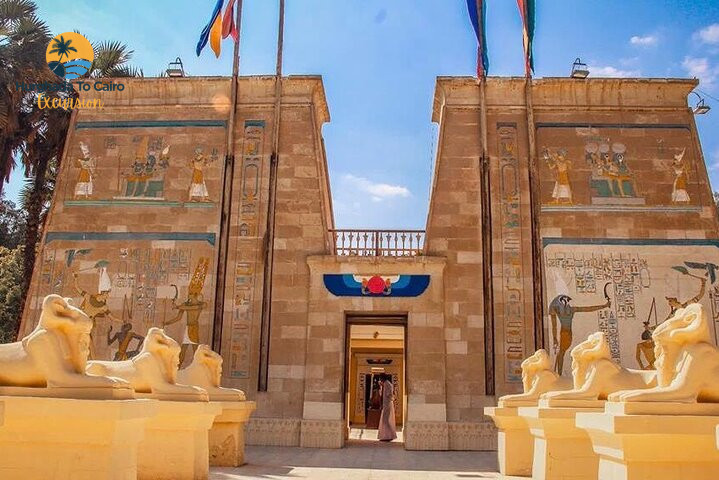
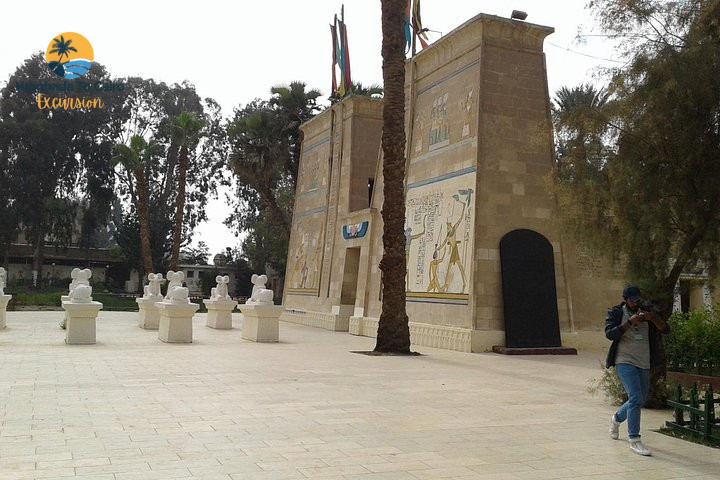
The Pharaonic Village tour from Hurghada takes you to a genuinely unique corner of Cairo: a living, moving recreation of ancient Egyptian daily life, experienced not from behind glass in a museum case, but from the deck of a boat gliding along a network of Nile canals, past costumed actors farming, weaving, and carving stone exactly as their ancestors did thousands of years ago. Built on its own island in the river and surrounded by thousands of trees, it is a genuinely different way to encounter ancient Egypt — interactive, family-friendly, and set entirely on the Nile itself.
📑 Table of Contents
Dr. Ragab’s Vision — The Papyrus Story
The Pharaonic Village’s story begins not with tourism, but with a genuine botanical mystery. The papyrus plant — the very source of ancient Egypt’s writing material, and a plant fundamental to the country’s ancient identity — had been extinct in Egypt for roughly a thousand years. Dr. Hassan Ragab, an Egyptian engineer, diplomat, and inventor, set out to solve this: after years of research, he sourced papyrus roots from Sudan and Ethiopia and successfully re-established the plant on Jacob’s Island in the Nile in 1966, restoring papyrus cultivation to Egyptian soil for the first time in a millennium.
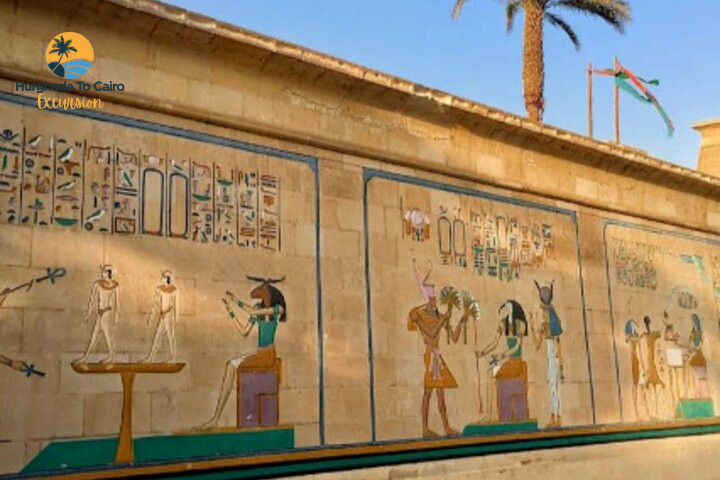
Ragab’s ambitions grew from there. Having visited Colonial Williamsburg in the United States — a living-history museum recreating 18th-century American colonial life through costumed interpreters and reconstructed buildings — he envisioned something comparable for ancient Egypt. From 1974, he began transforming the island into a detailed, physically reconstructed replica of ancient Egyptian community life, digging a network of canals overseeing scenes of agricultural and rural life, and planting over 5,000 trees — willows, sycamores, and date palms, all species recognisable from actual ancient tomb paintings — to screen the village from the modern city beyond. The Pharaonic Village welcomed its first visitors in 1977.
The Boat Journey Through Ancient Life
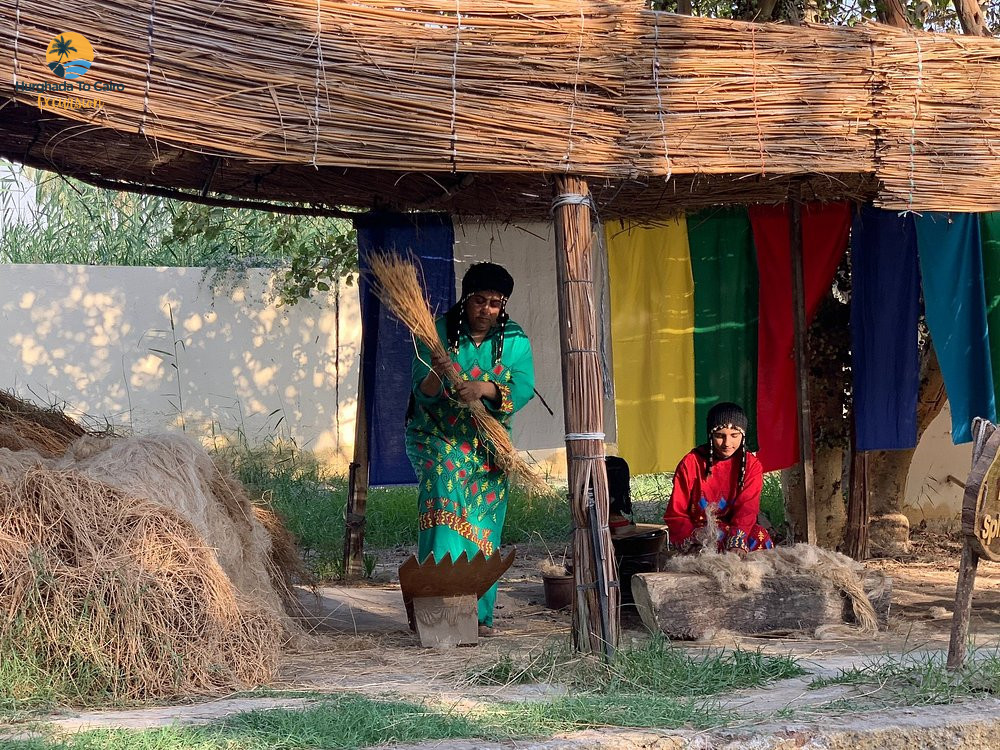
The heart of a Pharaonic Village visit is its signature motorised boat tour, a roughly 90-minute journey along the island’s network of canals. As you drift past the reconstructed scenery, costumed actors reenact daily ancient Egyptian life in real time — farming the land, weaving cloth, carving stone with traditional tools, building boats, and practising ancient crafts and trades exactly as depicted in tomb paintings and archaeological records. Multilingual commentary, offered in English, Arabic, French, and German, guides you through the major periods the tour covers, and — for younger visitors especially — turns history into something genuinely tactile and alive rather than something read about in a textbook.
The Museums & the Tutankhamun Tomb Replica
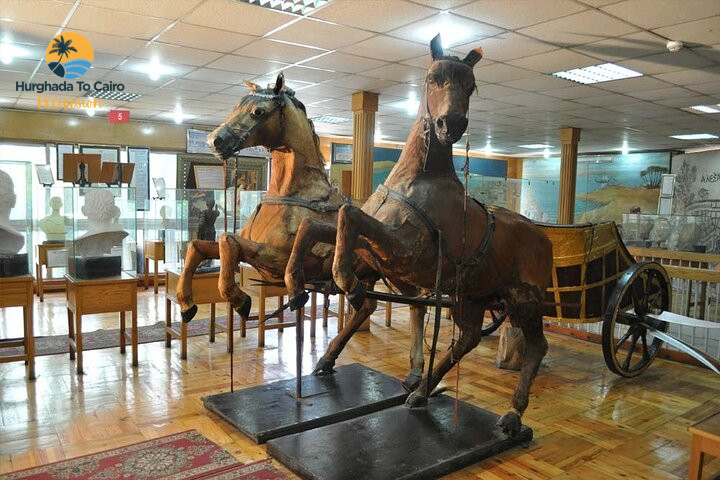
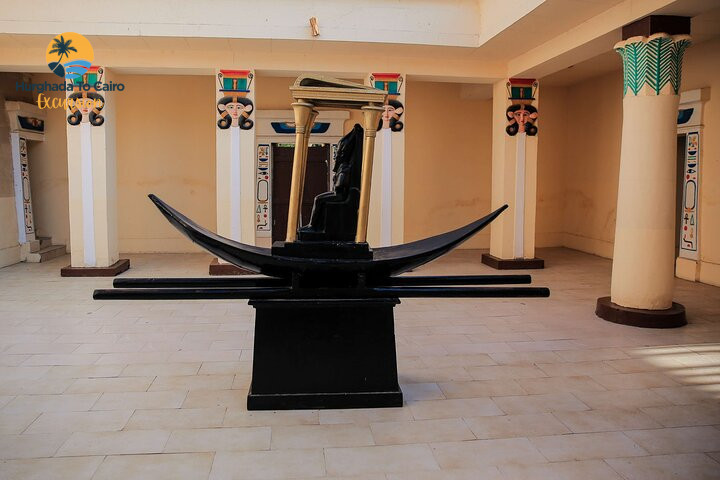
Beyond the boat journey, the village houses roughly a dozen specialised indoor museums and exhibits. Highlights include Dr. Hassan Ragab’s Hall, dedicated to the founder’s own life, inventions, and papyrus-restoration work; the Boats of Ancient Egypt Museum, featuring detailed models of historically significant vessels including King Khufu’s solar boat and King Tutankhamun’s funerary boats; and a genuinely elaborate replica of Tutankhamun’s tomb, recreating the tomb’s treasures and layout for visitors who may not make it to the original sites. Additional exhibits touch on Islamic history, Coptic Egypt, and Nubian culture, giving the site a broader scope than its “Pharaonic” name alone suggests.
A Genuine Family Experience
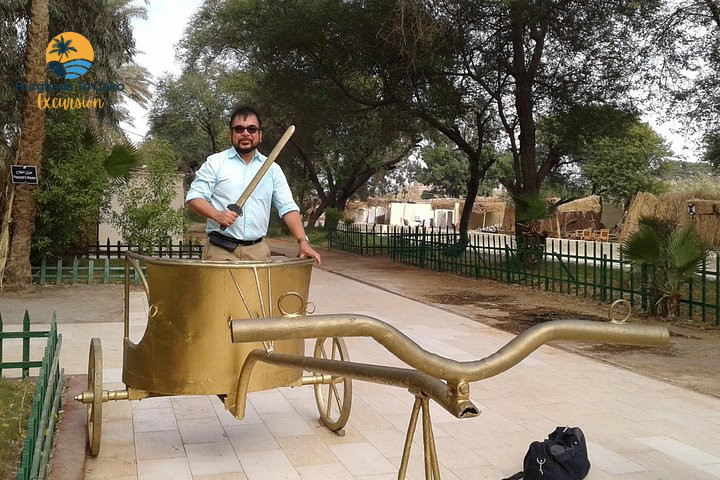
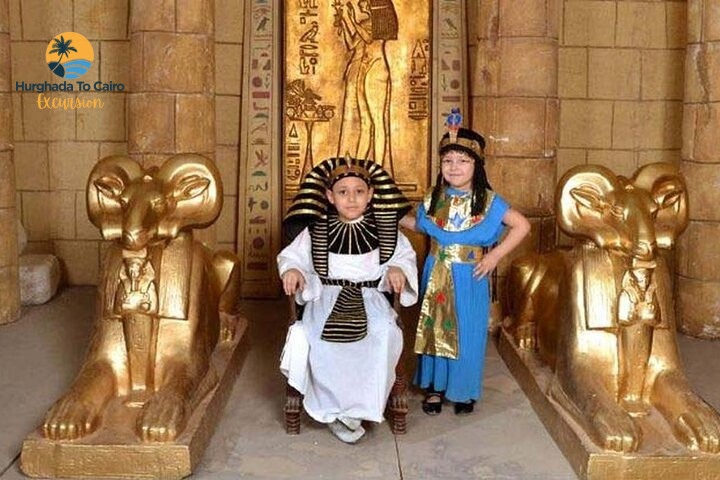
The Pharaonic Village is genuinely well suited to families with children. The boat tour’s moving, visual storytelling holds younger attention spans far better than a traditional static museum, and the costumed reenactments give kids a tangible, memorable sense of ancient daily life rather than an abstract history lesson. A popular add-on many families enjoy is Cleopatra’s Photo Studio, where visitors can dress in ancient Egyptian-style costume for a memorable souvenir photo — a genuinely fun, light-hearted way to close out the visit.
The Nile Island Setting
The village sits entirely on Jacob’s Island (Ya’qoub Island) in the Nile, in Giza Governorate, roughly 30 minutes from central Cairo. Access itself is part of the experience — visitors reach the island by ferry across the river before boarding the internal canal boat for the main tour. The genuinely lush, tree-covered setting, deliberately designed to muffle the sounds of the surrounding city, gives the whole visit a calm, almost secluded atmosphere that feels genuinely distinct from Cairo’s busier historical sites.
10 Highlights of Your Tour
Full Day Itinerary — Hour by Hour


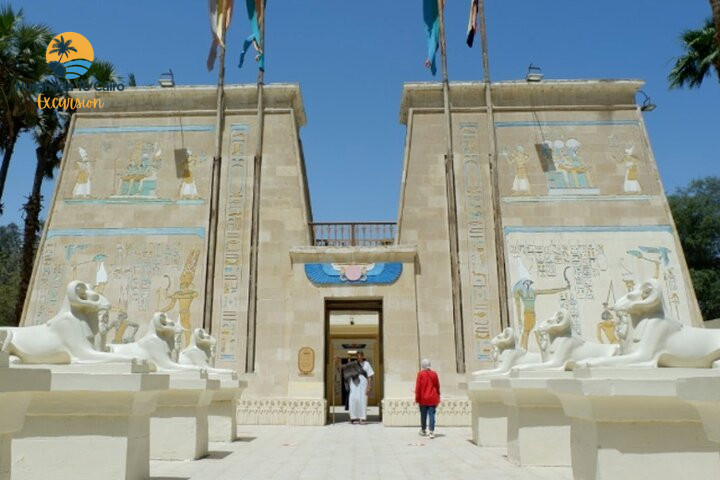
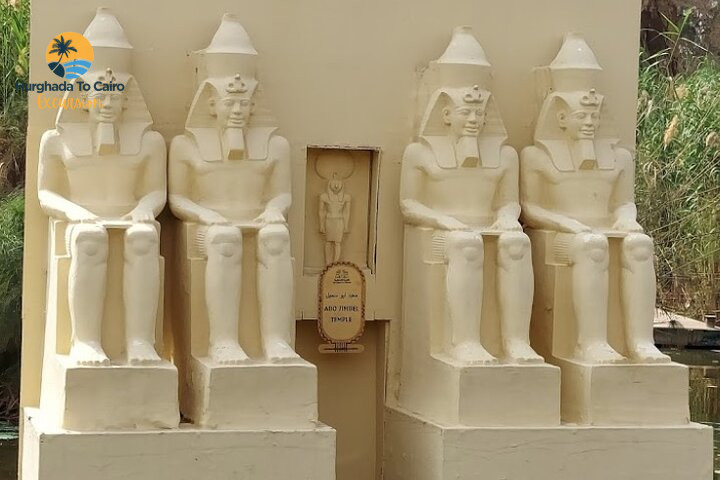
Enquire about your Pharaonic Village tour from Hurghada — ancient Egyptian life, brought genuinely to life on a Nile canal boat.
What This Tour Deliberately Does Not Include
This tour is deliberately centred on the Pharaonic Village itself, its boat journey, and its museum exhibits. It does not include the Pyramids of Giza, the Great Sphinx, or the Grand Egyptian Museum — genuinely wonderful, but entirely separate experiences with their own dedicated tours. The Pharaonic Village offers a fundamentally different way to encounter ancient Egypt: living and interactive rather than monumental and static, and this tour keeps that distinction clear rather than diluting the day with an unrelated headline site.
Accessibility & Practical Notes
The main boat tour involves boarding a motorised barge, with seating at deck level and a small step down from the dock — generally manageable for most visitors, though contact us at booking with specific mobility needs so we can advise honestly. The indoor museums are generally accessible on flat, paved paths across the island grounds.
What to Pack
10 Insider Tips
Tip 2 — Ask your guide about Dr. Ragab’s papyrus revival specifically. A genuinely remarkable, under-told story behind the entire site.
Tip 3 — Try Cleopatra’s Photo Studio if travelling with kids. A genuinely fun, memorable souvenir experience.
Tip 4 — Don’t rush the Tutankhamun tomb replica. It’s genuinely elaborate and worth proper time, especially if you won’t visit the original sites this trip.
Tip 5 — Bring sun protection. Much of the experience takes place outdoors on the water and grounds.
Tip 6 — This is a genuinely good pairing for a return Egypt visit. A different, complementary angle from the standard Pyramids and museum circuit.
Tip 7 — Sleep during parts of the long drive. The 5.5-6 hour journey each way is easier managed this way.
Tip 8 — Ask about the specific trees planted around the island. Deliberately chosen species recognisable from actual ancient tomb paintings.
Tip 9 — Engage with the costumed reenactors if you’re comfortable doing so. Many are happy to explain their craft in more detail.
Tip 10 — Approach this as a genuinely different kind of history day, not a smaller version of the Pyramids. It rewards that mindset with a far richer, more memorable experience.
Frequently Asked Questions
Enquire About Your Pharaonic Village Tour Today
Ancient Egyptian life, genuinely brought to life on a quiet Nile island — a living museum, and a genuinely memorable day for the whole family. Free cancellation up to 24 hours before departure.
All Cairo Trips from Hurghada
Cairo Tour from Hurghada for Families with Kids