🏛️ Private Tour · Grand Egyptian Museum · NMEC Royal Mummies · Coptic Museum · Egyptologist Guide · No Shopping Stops
Cairo Museums Tour from Hurghada Explore History
📅 Updated: June 2026 | ⏱️ 20 min read | 💶 From €165 / person | ⭐ 4.9/5 rated | 🏛️ Grand Egyptian Museum · NMEC · Coptic Museum · Imhotep Museum Included
The Cairo museums tour from Hurghada is Egypt’s most comprehensive single-day museum experience — a carefully designed programme that takes you through the greatest collections of ancient, Coptic, and Islamic Egyptian civilisation in sequence, guided by a licensed Egyptologist who transforms each museum from a room of objects into a living narrative of 7,000 years of human history.
Egypt is home to some of the world’s most significant museum collections — including the Grand Egyptian Museum (GEM), now the world’s largest archaeology museum, housing the complete treasure of Tutankhamun for the first time. The National Museum of Egyptian Civilization (NMEC) with its extraordinary Royal Mummies Hall — 22 pharaohs including Ramses II, Hatshepsut, and Seti I, displayed in purpose-built climate-controlled cases. The Coptic Museum, containing the world’s finest collection of early Christian art from Egypt. And the Imhotep Museum at Saqqara, housing 2020–2022 discoveries that have not yet been replicated in any collection outside Egypt.
This Cairo museums tour from Hurghada combines the three or four most significant of these collections into a single day — with your Egyptologist guide connecting the narrative thread that runs through all of them: the story of a civilisation that began 7,000 years ago, reached extraordinary heights under the Pharaohs, was transformed by early Christianity, reshaped by Islamic conquest, and continues living today in the museums, churches, mosques, and communities of Cairo.
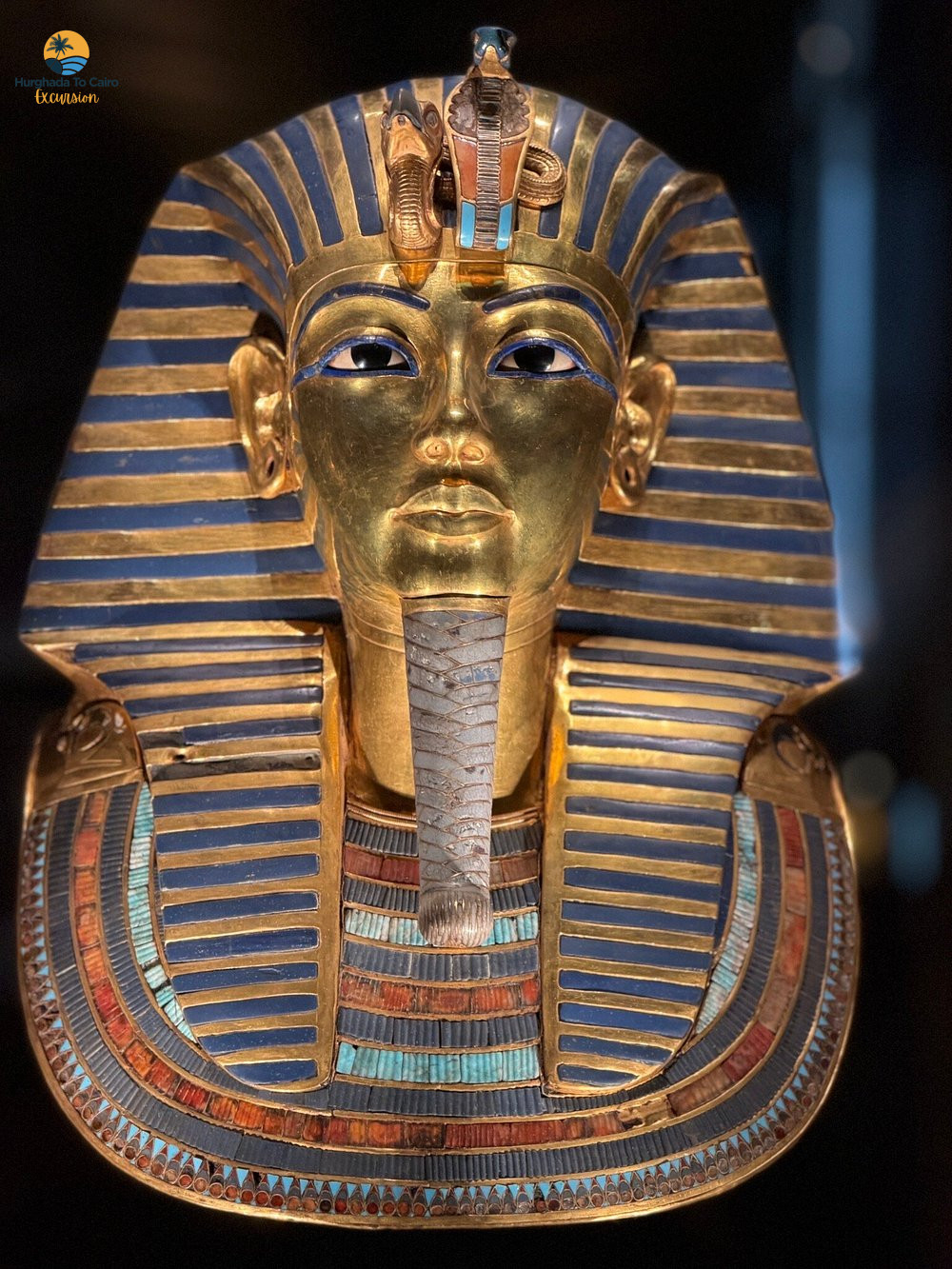
💡 Why a dedicated museum tour is different from museum visits within other tours: Most Cairo day trips include a museum as a secondary stop — 45 minutes in the Egyptian Museum between the Pyramids and Khan El Khalili. The Cairo museums tour treats the collections as the primary destination. Your Egyptologist guide has time to explain why the Narmer Palette (3100 BCE) is the world’s earliest historical document, why Tutankhamun’s death mask contains specific alloy information about 14th-century BCE trade routes, and how the Coptic Museum’s 4th-century Biblical manuscripts connect to the village in Upper Egypt where they were found. Museum depth is only possible when museums are the point.
Cairo’s Greatest Museums — What You Will Visit & Why
Cairo is home to a constellation of world-class museum collections spanning every era of Egyptian history from prehistory to the 20th century. The Cairo museums tour from Hurghada selects the three or four most significant collections and combines them into a single coherent day — each museum representing a different chapter in the same extraordinary story.
| Museum |
Era Covered |
Signature Collection |
In Our Tour? |
| Grand Egyptian Museum (GEM) |
Pharaonic — all periods |
Complete Tutankhamun treasure (5,000+ objects) |
✓ Core stop |
| NMEC — Royal Mummies Hall |
New Kingdom pharaohs |
22 royal mummies — Ramses II, Hatshepsut, Seti I |
✓ Core stop |
| Coptic Museum |
1st–13th century CE |
World’s finest Coptic Christian art; Nag Hammadi texts |
✓ Core stop |
| Imhotep Museum (Saqqara) |
Old Kingdom + 2020–2022 discoveries |
250 sealed coffins, gilded mummies, bronze statues |
✓ Optional core |
| Egyptian Museum (Tahrir) |
Pharaonic — broad survey |
Historic original collection (pre-GEM transfer) |
On request |
| Islamic Art Museum |
7th–19th century CE |
World’s finest Islamic decorative arts collection |
On request |
Together, these museums tell the complete story of Egyptian civilisation — from the first Pharaohs (GEM) through the royal burials of the New Kingdom (NMEC), the arrival of Christianity (Coptic Museum), and the latest archaeological discoveries (Imhotep Museum). Your Egyptologist guide connects the narrative thread running between all four collections, showing how each museum is a chapter of the same extraordinary human story.
Grand Egyptian Museum — The World’s Largest Archaeology Museum
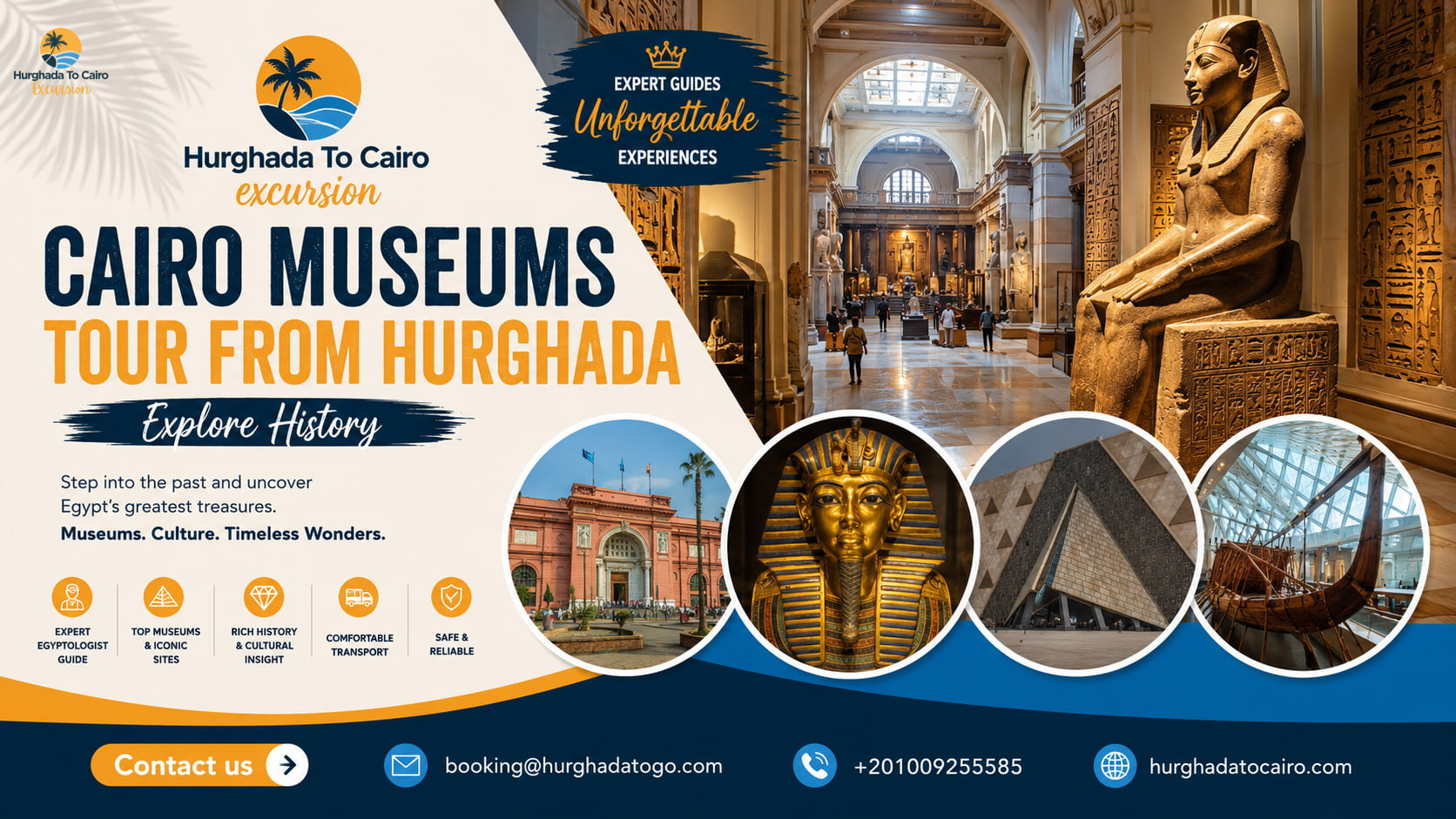
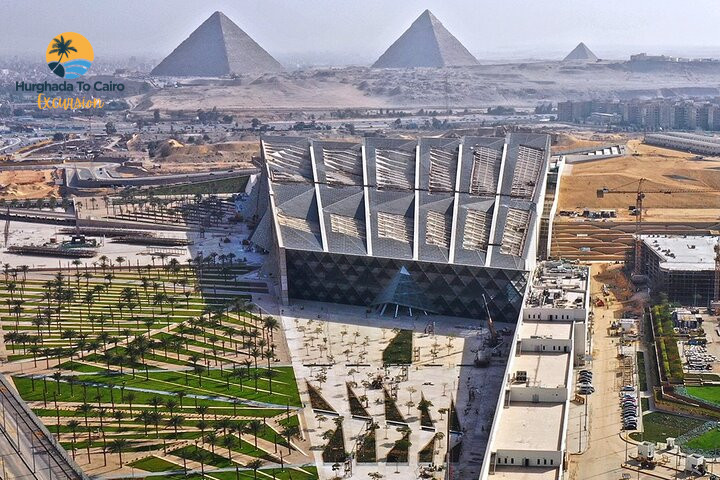
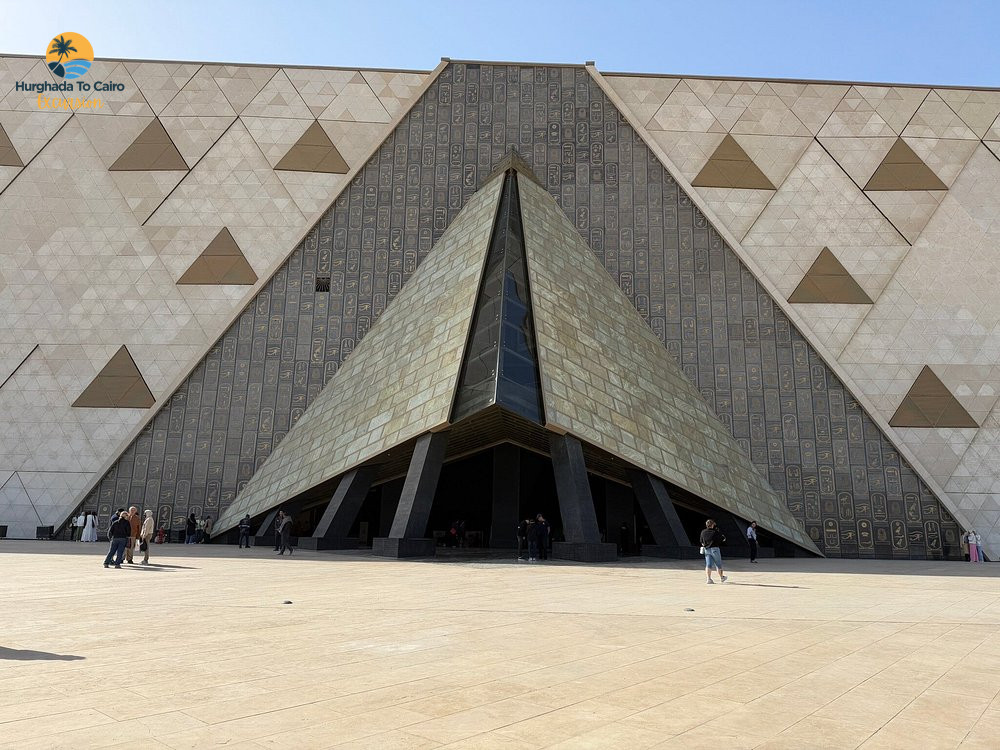
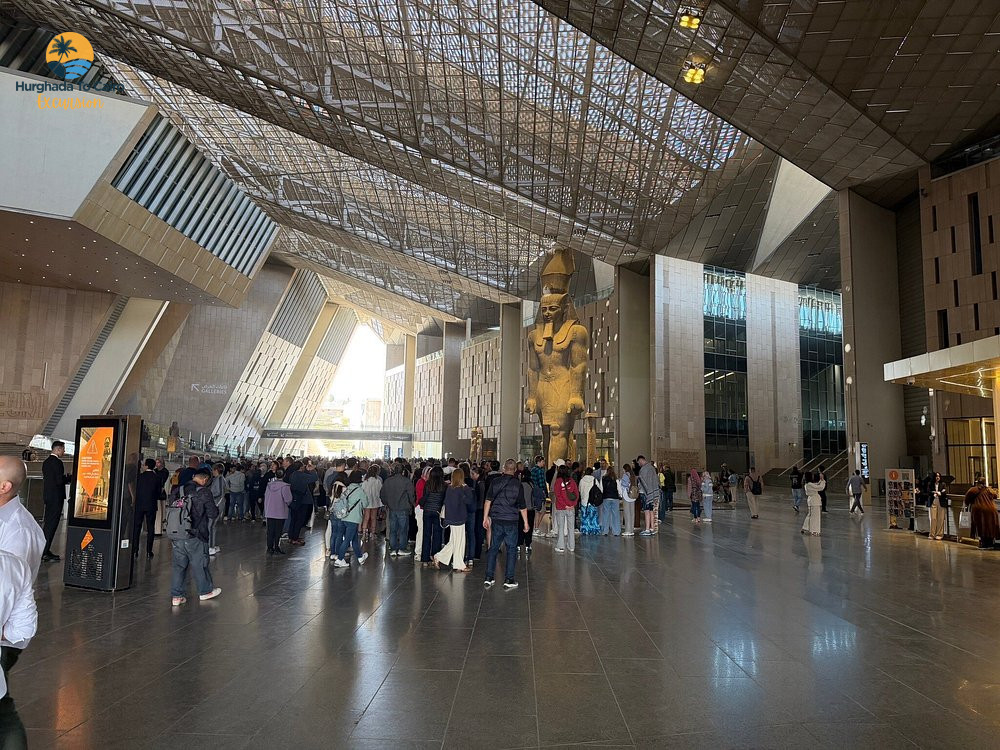
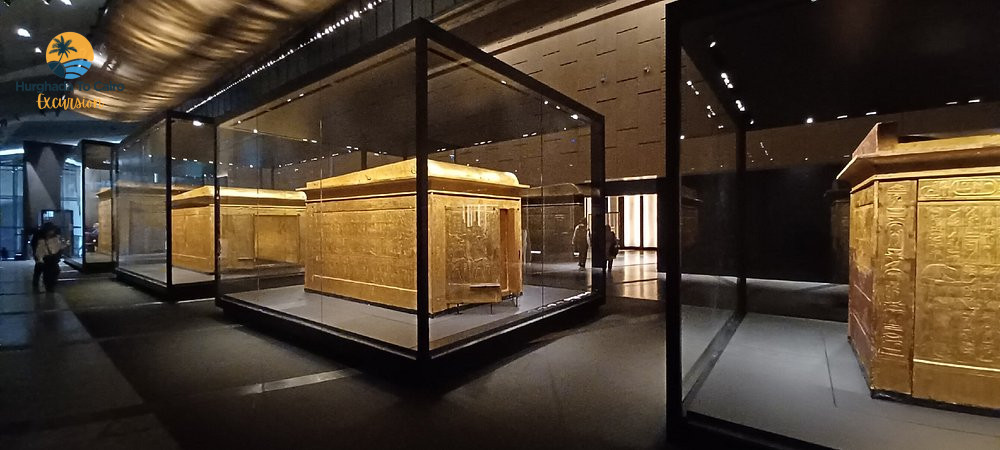
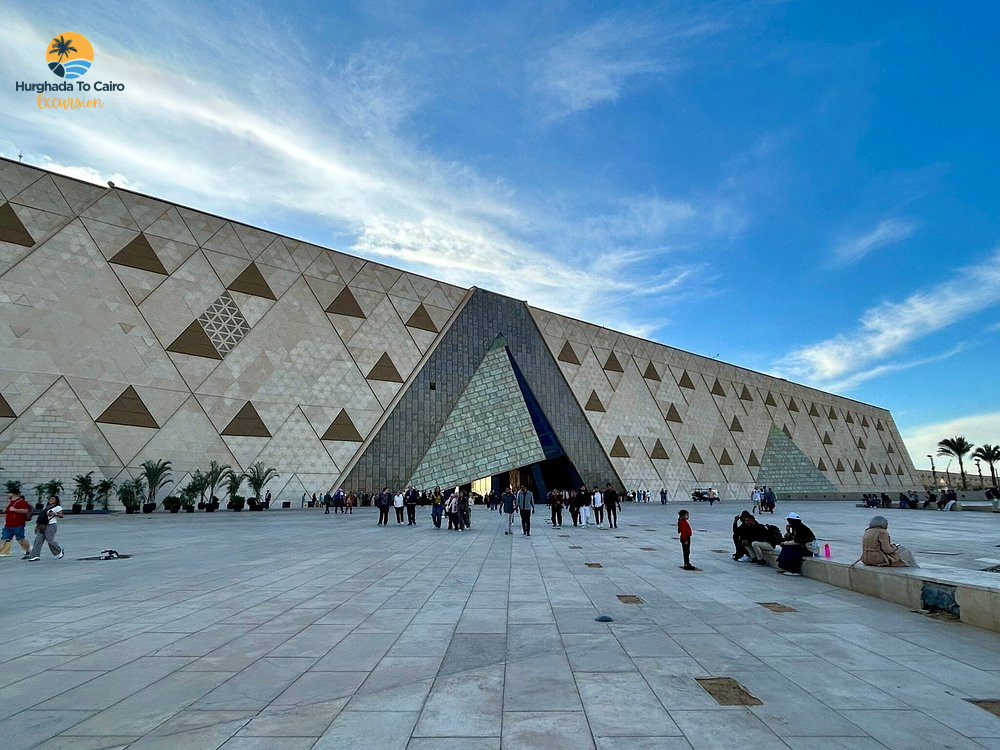
The Grand Egyptian Museum — opened fully in 2025 beside the Giza Pyramids — is now the world’s largest archaeology museum, covering approximately 490,000 square metres and housing over 100,000 objects spanning 5,000 years of Egyptian civilisation. At its heart is the complete treasure of Tutankhamun — 5,000+ objects from the boy-king’s intact tomb, displayed together in a single museum for the first time since their discovery by Howard Carter in 1922.
👑
The Tutankhamun Galleries
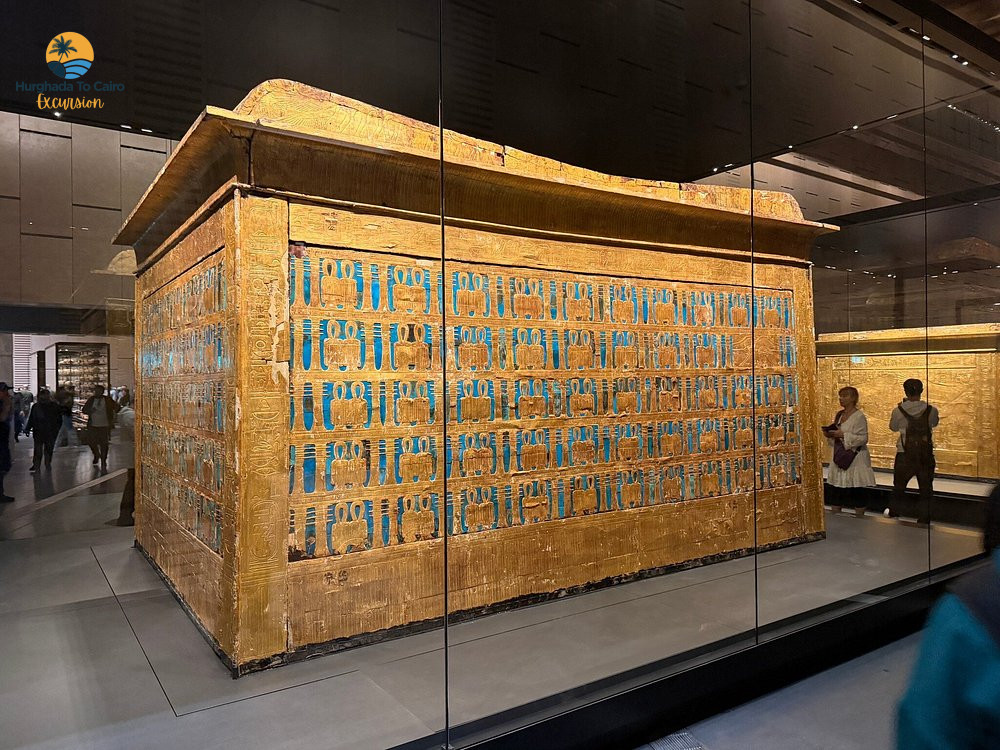
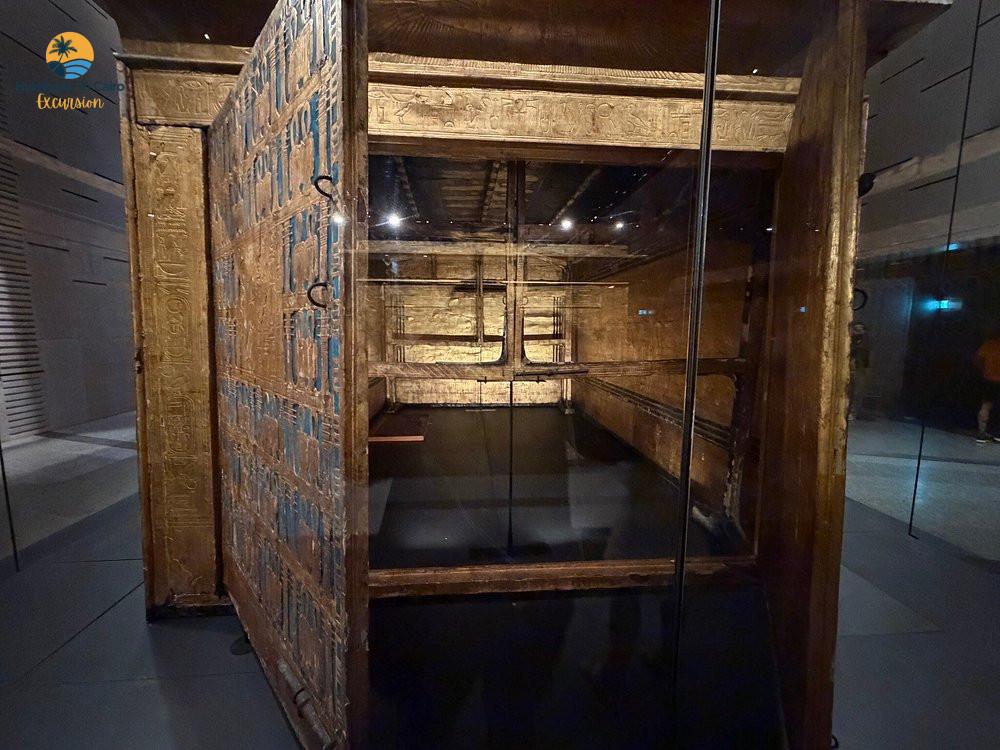
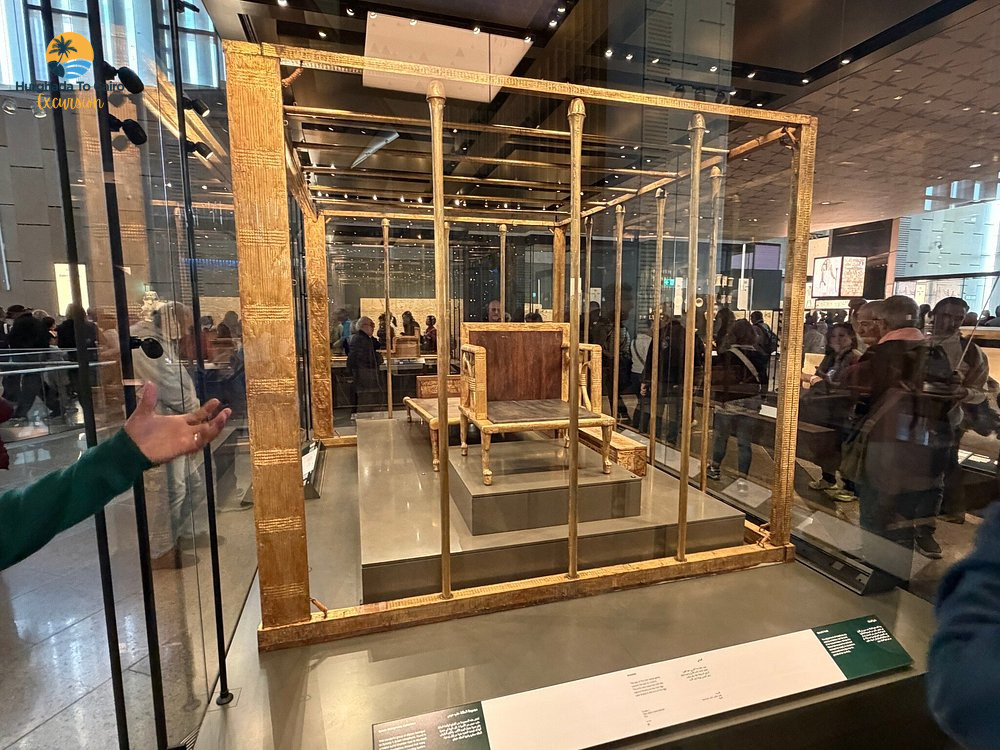
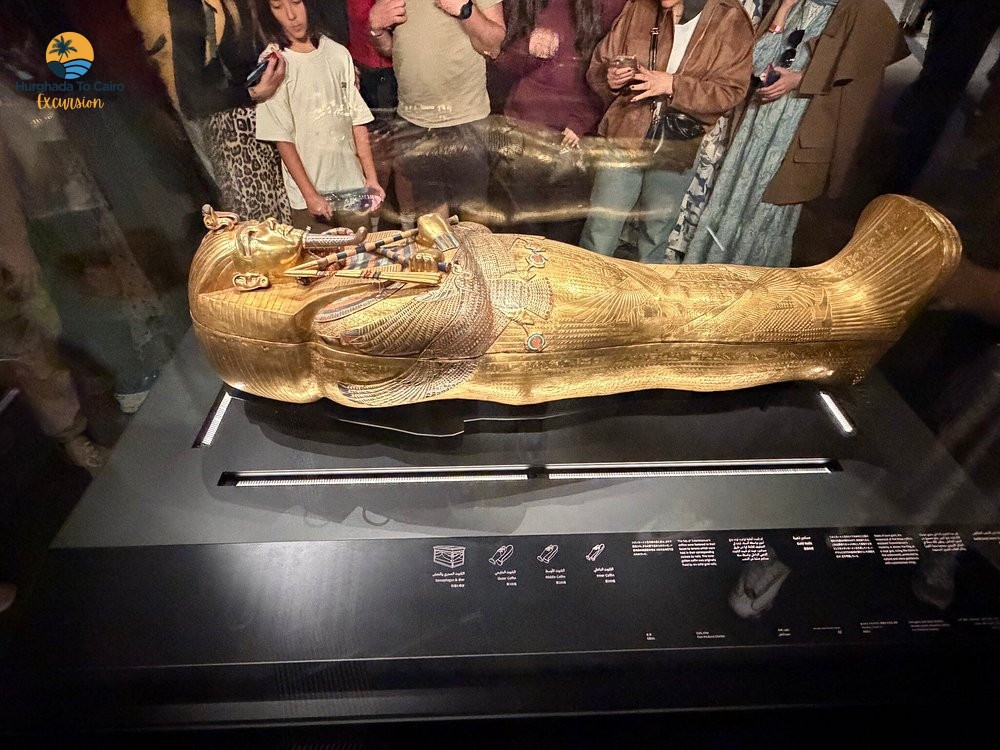
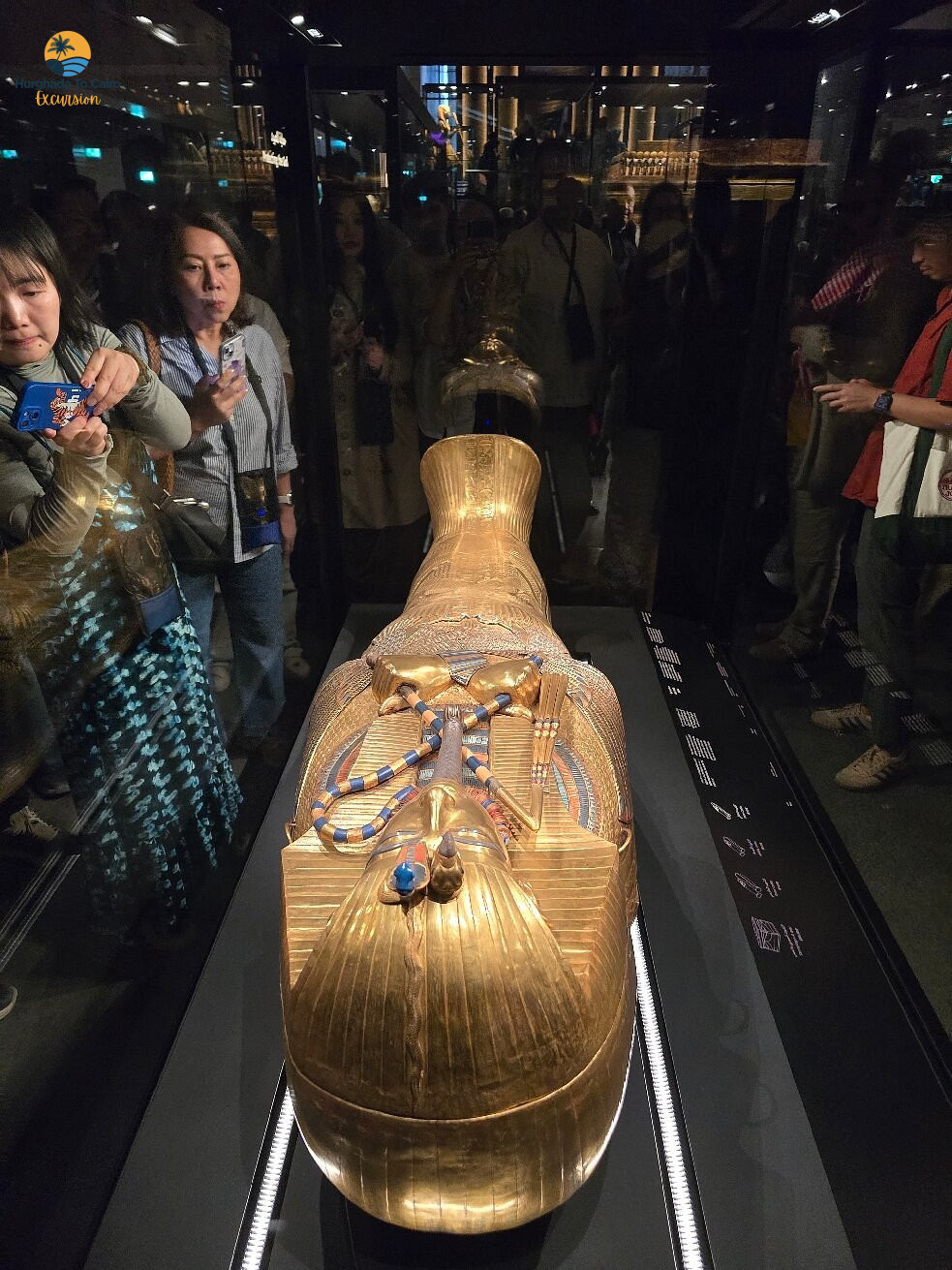
5,000+ objects from Tutankhamun’s tomb — the death mask, the golden throne, the canopic jars, the chariots, the ceremonial beds, the musical instruments, and thousands of smaller objects of extraordinary craftsmanship. Your guide explains which objects have forensic evidence of the king’s mysterious death and what the 2023 void chamber discovery potentially means for the existing theories.
🗿
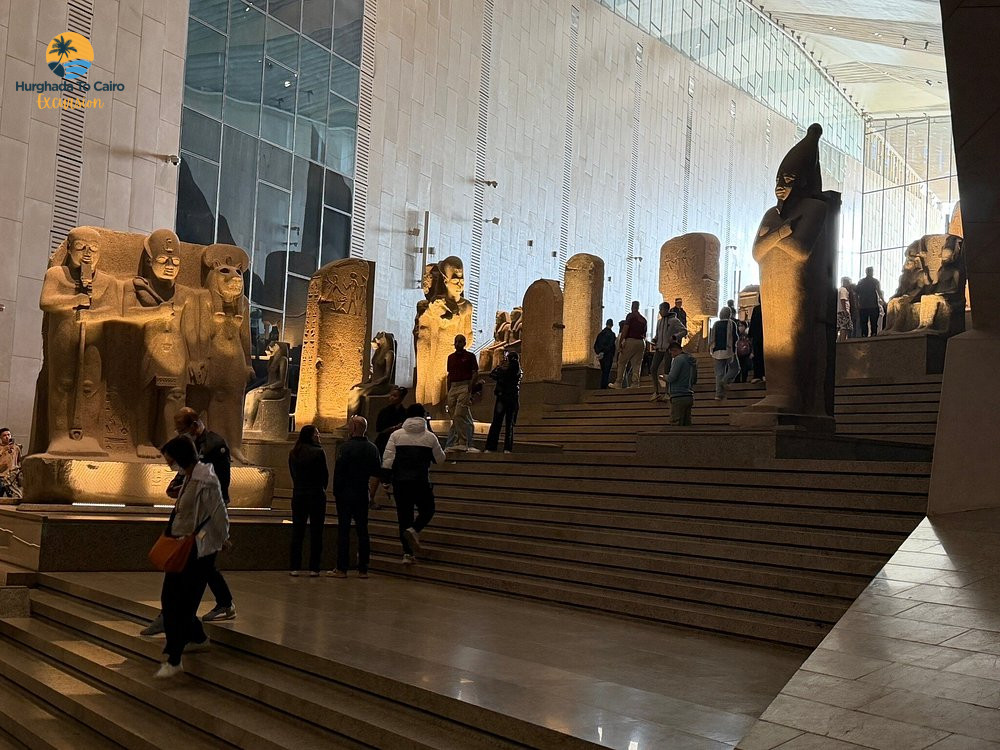
The Grand Staircase
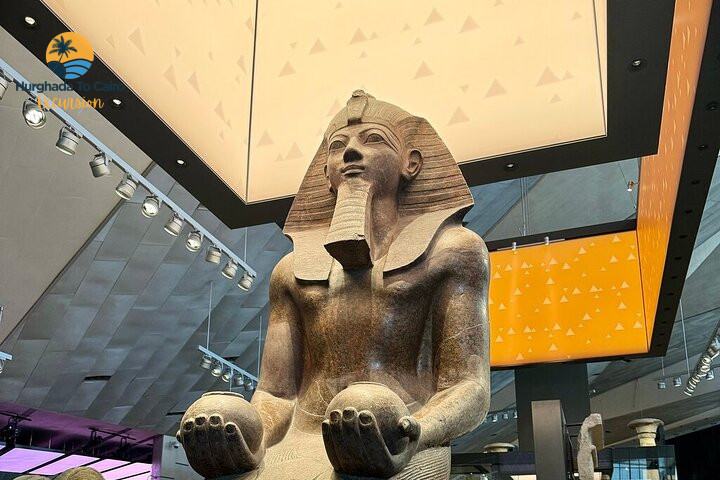
The museum’s monumental staircase is lined with 87 colossal statues of Ramses II — spanning the full chronology of his 66-year reign, showing the artistic evolution of royal portraiture across six decades. Your guide walks you up this staircase as the opening act of the museum experience, showing how much changed (and how much remained constant) in Egyptian royal art across a single lifetime.
📜
The Narmer Palette (3100 BCE)
A green siltstone palette 63 cm tall, carved to record the unification of Upper and Lower Egypt under Narmer — the earliest historical document in human history. Your guide explains exactly what is depicted on both faces and why this object, more than any other in the GEM, represents the moment Egyptian civilisation declared itself to the world.
🛥️
The Khufu Solar Boat
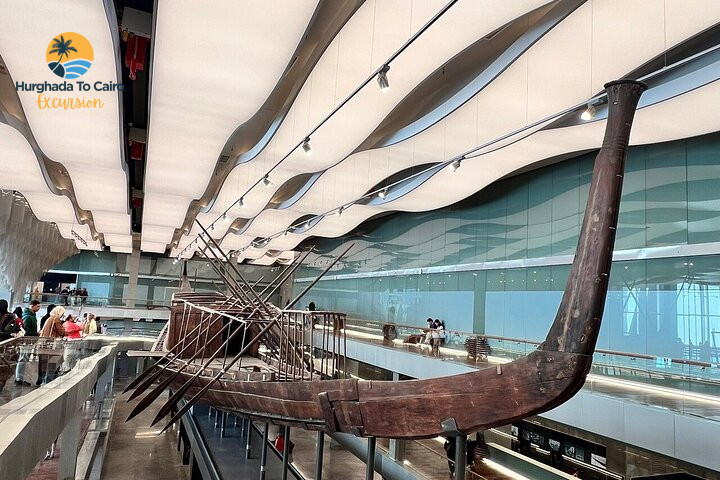
The 43-metre cedar boat buried beside the Great Pyramid in 2500 BCE — one of the oldest intact vessels in the world, reassembled over decades and now displayed in the GEM’s dedicated boat gallery. Your guide explains the religious significance of the solar boat (the means by which the pharaoh’s soul travels with the sun god Ra) and the extraordinary discovery and restoration story.
💡 Why a guide is essential at the GEM: The Grand Egyptian Museum covers 490,000 square metres — without a guide, choosing what to see and how long to spend is impossible. Many objects have limited English labelling (the museum is still rolling out full interpretive content). Without narrative context, even Tutankhamun’s death mask looks simply like gold. With your Egyptologist guide explaining the 1922 discovery story, the forensic analysis of Tutankhamun’s cause of death, the alloy composition of the mask, and the decades-long journey from Carter’s trench to this glass case — the death mask becomes one of the most complex and emotionally affecting objects in the world.
Coptic Museum — 2,000 Years of Christian Egypt
The Coptic Museum in Old Cairo is the world’s finest collection of Coptic Christian art — 16,000 objects spanning the 1st to 13th centuries, housed in a beautiful 1908 building in the garden adjacent to the Hanging Church. For visitors doing the Cairo museums tour, the Coptic Museum provides the essential transition between the ancient Pharaonic world (GEM and NMEC) and the later religious and cultural story of Egypt — demonstrating how the visual language of the Pharaohs became the visual language of Egyptian Christianity.
📜 Nag Hammadi Library — Gnostic Gospels
4th-century Coptic manuscripts including the Gospel of Thomas — discovered in Upper Egypt in 1945 and transforming scholarly understanding of early Christianity. Brought to the Coptic Museum for preservation. Some of the most historically significant documents in the world.
🧵 Pharaonic-Christian Textiles
4th–8th century woven textiles depicting biblical narratives in wool and linen — still vivid with original colour after 1,600 years. The techniques are inherited directly from Pharaonic weaving traditions. Physical proof of the artistic continuity between ancient and Christian Egypt.
✝️→🔱 The Visual Transition
Your guide shows exactly where Pharaonic religious imagery became Christian: the Ankh cross becomes the Coptic cross; Isis nursing Horus becomes the Virgin and Child; Pharaonic funerary vessels become Christian liturgical objects. The most compelling demonstration of civilisational continuity in any museum in Egypt.
🖼️ Byzantine-Era Icons
Some of the oldest surviving Christian icon panels in the world — 5th to 10th century paintings on wood, showing the earliest development of the icon tradition that spread from Egypt across the entire Christian world.

Imhotep Museum at Saqqara — Egypt’s Freshest Discoveries
Located on-site at Saqqara, the Imhotep Museum is the newest significant collection in Egypt — housing the extraordinary discoveries from the 2020–2022 excavations that produced some of the most dramatic archaeological news stories of the 21st century. No other museum in Egypt displays objects this recently excavated, and no other museum demonstrates so vividly that Egypt’s archaeological story is ongoing — still actively producing discoveries that transform our understanding of the ancient world.
⚰️ 250 Sealed Coffins (2020)
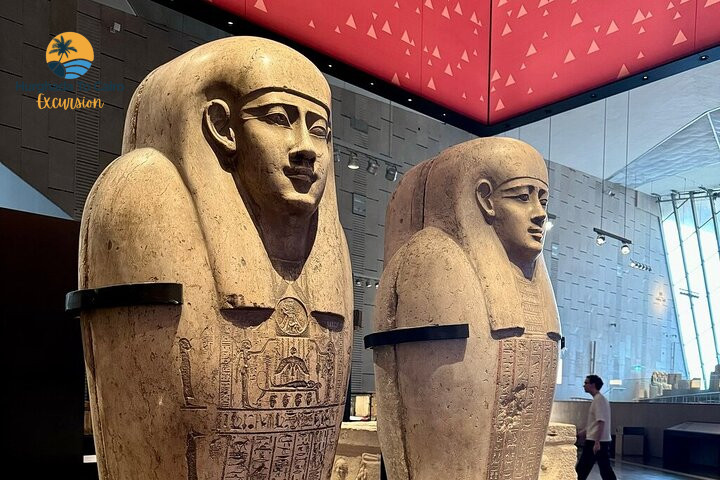
250 Late Period wooden coffins found sealed in burial shafts beneath Saqqara — the largest such cache in modern Egyptian archaeology. Many still painted in original vivid colour. Displayed exactly as they were found, with excavation documentation.
🥇 40 Gilded Mummies (2021)
Mummies whose faces were covered in gold leaf — rare examples of gilded mummification from the New Kingdom period, discovered in a sealed chamber beneath the Saqqara plateau. Objects of extraordinary visual impact.
🥉 Bronze Divine Statues (2022)
A cache of 150 bronze statues of Egyptian deities — Anubis, Sekhmet, Osiris, Bastet — from a single votive deposit. Individual objects of exceptional quality displayed alongside X-ray analysis showing their internal casting techniques.
🏛️ Imhotep — The Deified Architect
The museum is dedicated to Imhotep — the architect of the Step Pyramid, physician, high priest, and the first named individual in human history to be fully deified after death. Your guide narrates the story of this extraordinary man whose achievements still stand directly outside the museum window.
10 Must-See Objects on Your Cairo Museums Tour
👑
1. Tutankhamun’s Death Mask (GEM) ⭐⭐⭐
11 kg of solid gold, inlaid with lapis lazuli, turquoise, carnelian, and obsidian — the most recognisable archaeological object in the world. Your guide explains the 1922 discovery, the forensic analysis of Tutankhamun’s cause of death, and why the specific alloy composition tells us about 14th-century BCE international trade. Standing before the actual object — not a photograph — is one of the great moments of any Egypt visit.
📜
2. Narmer Palette (GEM) ⭐⭐⭐
The world’s earliest historical document — 3100 BCE, recording the unification of Egypt under its first Pharaoh. A 63 cm carved siltstone palette that marks the moment Egyptian civilisation first declared itself as a political entity. Your guide reads both faces of the palette in sequence.
🗿
3. The Khufu Statuette (GEM) ⭐⭐
7.5 cm of carved ivory — the only surviving image of the man who built the Great Pyramid. The most intimate Pharaonic portrait in Egypt, displayed in a small case that most visitors walk past. Your guide knows exactly where it is and why it matters more than every giant statue in the building.
🛥️
4. The Khufu Solar Boat (GEM) ⭐⭐
43 metres of Lebanese cedar assembled without a single nail — one of the oldest intact vessels in the world, buried beside the Great Pyramid in 2500 BCE. The boat gallery is one of the most serene and overwhelming spaces in the entire museum.
👑
5. Ramses II — Royal Mummies Hall (NMEC) ⭐⭐⭐
The actual physical remains of Egypt’s greatest Pharaoh — the man who built Abu Simbel, ruled for 66 years, and fathered over 100 children. CT scan reveals red hair, severe arthritis, and the traces of extraordinary longevity. Not a statue — the man himself.
⚔️
6. Ramses III — Confirmed Assassination (NMEC) ⭐⭐
CT scan evidence of the throat wound that killed him — the forensic confirmation of a harem conspiracy documented in Egyptian papyri of the period. Ancient history’s most dramatically confirmed murder case, displayed beside the actual victim.
📜
7. Nag Hammadi Gospel of Thomas (Coptic Museum) ⭐⭐⭐
A 4th-century Coptic papyrus containing sayings attributed to Jesus not found in the canonical Gospels — part of the Nag Hammadi Library discovered in Upper Egypt in 1945, one of the most significant documentary finds of the 20th century. The object that changed biblical scholarship.
🧵
8. 6th-Century Coptic Textiles (Coptic Museum) ⭐⭐
Woven linen and wool panels depicting biblical scenes in colours still vivid after 1,500 years. Physical demonstrations of the artistic continuity between Pharaonic craft traditions and early Christian visual culture — the most tangible evidence available that Egypt’s cultural identity survived the religious transition.
⚰️
9. 250 Sealed Coffins (Imhotep Museum) ⭐⭐
The 2020 discovery that produced the largest cache of sealed Late Period coffins in modern history — displayed with their excavation documentation showing exactly how and where they were found. Objects so recently excavated they have not yet appeared in any publication outside Egypt.
🥉
10. Bronze Statue Cache (Imhotep Museum) ⭐
150 bronze statues of Egyptian deities discovered in a votive deposit at Saqqara in 2022 — many of exceptional individual quality, displayed alongside the X-ray analysis revealing their casting techniques. The most recently excavated significant collection in Egypt.
Complete Itinerary — From Hotel Pickup to Return Transfer
The full hour-by-hour programme for your Cairo museums tour from Hurghada — every step from vehicle pickup to hotel return delivery, with all museum visits fully scheduled and narrated.
🚗
04:00 – 05:00 AM
Private Hotel Pickup — All Hurghada, Marsa Alam & El Quseir Hotels
Your private air-conditioned vehicle arrives at your hotel entrance. Pickup times: Central Hurghada 04:00 AM · El Gouna 04:20 AM · Sahl Hasheesh 04:30 AM · Makadi Bay 04:45 AM · Soma Bay 05:00 AM · Marsa Alam 02:30 AM · El Quseir 03:00 AM (contact us for custom Red Sea south coast pickup). Your licensed Egyptologist guide travels with you from pickup — beginning the pre-museum briefing during the drive: the history of Egyptian archaeology, how the GEM differs from the old Egyptian Museum, what Tutankhamun’s actual death may have involved, and the story of the 2020–2022 Saqqara discoveries that produced some of the most significant recent archaeological news. Bottled water and USB charging throughout.
⛰️
04:00 – 08:30 AM
Hurghada to Cairo — Private Transfer (~460 km)
The drive covers approximately 460 km via the Cairo–Suez desert motorway — 4.5 hours in a modern, comfortable vehicle. Your guide uses this time to connect the four museums you will visit: the GEM shows what was buried with the Pharaohs; the NMEC shows the Pharaohs themselves; the Coptic Museum shows what became of Egyptian civilisation after the Pharaohs; and the Imhotep Museum shows what is still being discovered about all three eras. By the time you arrive, you understand how the four collections relate to each other. Comfort stops at modern service stations.
🏛️
08:30 – 10:30 AM
Grand Egyptian Museum — 2-Hour Focused Egyptologist Tour ⭐⭐⭐
Arriving at the GEM before the main crowds, your guide navigates you through the museum’s vast space with precision — focusing on the objects that matter most rather than covering everything superficially. The programme: (1) The Grand Staircase of Ramses II statues — your opening orientation to royal scale in Egyptian art. (2) The Narmer Palette (3100 BCE) — the world’s earliest historical document. (3) The Tutankhamun Galleries — Howard Carter’s discovery story, the death mask with forensic context, the golden throne, the chariots, and the childhood objects that make Tutankhamun human rather than mythological. (4) The Khufu Statuette — the 7.5 cm ivory portrait of the Great Pyramid’s builder, which your guide specifically navigates to (most visitors miss it entirely). (5) The Khufu Solar Boat — the 43-metre cedar vessel buried in 2500 BCE. Total: 2 hours, covering the collection’s greatest objects with full narrative depth.
🚗
10:30 – 11:00 AM
Transfer: GEM to NMEC (Giza → Fustat, ~20 mins)
A 20-minute drive from the GEM (beside Giza) to the NMEC (in Fustat, Old Cairo). During the transfer, your guide continues the narrative — explaining the transition from the objects in the GEM to the people those objects belonged to, and the extraordinary April 2021 Pharaohs’ Golden Parade that brought 22 royal mummies through Cairo’s streets to their new home.
👑
11:00 AM – 12:00 PM
NMEC Royal Mummies Hall — 1-Hour Guided Encounter ⭐⭐⭐
One hour in the Royal Mummies Hall — organised chronologically by dynasty, each mummy displayed in an individually designed climate-controlled case with low lighting and extraordinary conservation care. Your guide walks you through the chronological sequence: Ahmose I (founder of the New Kingdom), Hatshepsut (identified by a single tooth match in 2007), Thutmose III (“the Napoleon of Egypt”), Seti I (best-preserved mummy in the hall), Ramses II (the most famous), and Ramses III (confirmed assassination victim). At each stop, the guide provides not just the historical context but the modern forensic science — CT scan findings, DNA analysis results, and what each mummy’s physical remains tell us about how these people actually lived and died. The atmosphere of the hall — purposefully solemn, well-lit but restrained — is one of the most affecting museum environments in Egypt.
✝️
12:00 – 13:00 PM
Coptic Museum — 1-Hour Guided Collection Tour ⭐⭐
The Coptic Museum is located in Old Cairo, immediately adjacent to the Hanging Church — a 5-minute walk from the NMEC. One focused hour with your Egyptologist guide: (1) The Pharaonic-to-Christian visual transition — the guide shows you specifically where the Ankh becomes the Coptic cross, where Isis becomes the Virgin Mary, demonstrating the physical continuity of Egyptian civilisation across the religious transformation. (2) The Nag Hammadi Library — the Gospel of Thomas and other Gnostic texts in their original papyrus form, the guide explaining the 1945 discovery and its significance for understanding early Christianity. (3) The Byzantine-era icons — some of the oldest surviving Christian icon panels in the world. (4) The ancient Coptic textiles — 1,600-year-old woven scenes still vivid with original colour. A museum that surprises almost every visitor with its depth and the unexpectedness of what it contains.
🍽️
13:00 – 14:00 PM
Traditional Egyptian Lunch — Old Cairo Area
Lunch at a quality local restaurant near Old Cairo — traditional Egyptian mezze, grilled meats, koshary, fresh bread, cold drinks. Your guide selects on food quality, not commission. Vegetarian, halal, and child-friendly options always available. Included in tour price. The guide uses the lunch conversation to connect the three museums already visited — explaining how the Tutankhamun objects (GEM) relate to the man in the Royal Mummies Hall (NMEC) and how the Coptic Museum’s Gospel of Thomas changes our picture of early Egyptian Christianity. The most intellectually productive meal of the day.
🚗
14:00 – 14:25 PM
Transfer: Old Cairo to Saqqara (~25 mins)
A 25-minute drive from Old Cairo to Saqqara — the ancient necropolis where Egypt’s oldest archaeological deposits continue to yield extraordinary discoveries. During the transfer, your guide introduces Imhotep — the architect of the Step Pyramid, the first named individual in history, and the inspiration for the museum bearing his name. The guide also prepares you for the specific 2020–2022 discoveries you are about to see in the museum.
🏺
14:25 – 15:30 PM
Imhotep Museum & Saqqara Step Pyramid — Final Programme ⭐⭐
65 minutes at Saqqara covering the Imhotep Museum and a brief outdoor visit to the Step Pyramid complex. Imhotep Museum programme: the 250 sealed coffins from the 2020 excavations (displayed with original excavation documentation), the 40 gilded mummies from 2021, the 150 bronze statues from 2022, and the museum’s narration of Imhotep’s life and deification. Then a 15-minute walk to the exterior of the Step Pyramid — the world’s oldest stone building, restored 2020 — viewed from outside as the physical monument that the Imhotep Museum exists to interpret. Your guide closes the day’s narrative arc: Imhotep built the first pyramid (Step Pyramid, 2650 BCE), which led directly to the Great Pyramid of Khufu (2560 BCE), whose objects are in the GEM you visited this morning — a 5,000-year story completed.
➕
15:30 – 16:15 PM (Optional)
Optional Extension: Saqqara Noble Tombs or Old Cairo Churches
For groups with energy and interest after the four museums, an optional 45-minute extension is available at no extra cost: either the Saqqara noble tombs (Tomb of Ti — the finest painted relief tombs in Egypt, where Old Kingdom daily life is depicted in extraordinary vivid colour 4,500 years later) or a brief return to Old Cairo for the Hanging Church interior (if not already seen during the Coptic Museum visit). Your guide recommends based on the group’s energy and remaining interests. Many museum-focused guests find the noble tombs the perfect physical counterpart to the afternoon’s object-based museum experience.
🚗
15:30 (Direct) / 16:15 (Extended) – 20:00 / 20:45 PM
Private Return Transfer — Saqqara / Old Cairo to Hurghada Hotel
Your private vehicle departs directly for your Hurghada hotel — door to door, no shared stops, no detours. Return drive approximately 4.5 hours. Direct return: arrive back ~20:00–20:30. With optional extension: arrive back ~20:45–21:15. Marsa Alam guests: add approximately 60 minutes. El Quseir guests: add approximately 45 minutes. Bottled water and USB charging throughout the return journey.
Private · Licensed Egyptologist · GEM · NMEC · Coptic Museum · Imhotep Museum
Secure your Cairo museums tour from Hurghada — the complete story of Egyptian civilisation across four world-class collections in one extraordinary day.
🏛️ Book Cairo Museums Tour — From €165 Per Person
Free cancellation up to 24 hours before departure
Tour Quick Facts — Duration, Pickup Times & Languages
📋 Tour at a Glance
DurationFull day (~16–17 hrs door to door)
Museum time total~5 hours across 4 museums
Pickup (Hurghada)04:00–05:00 AM
Pickup (Marsa Alam)02:30 AM (contact us)
Pickup (El Quseir)03:00 AM (contact us)
Return to Hurghada~20:00–21:15 PM
LanguagesEnglish · French · German · Spanish
Group SizePrivate — your group only
Minimum2 adults (solo supplement: +25%)
⏰ Pickup by Location
Central Hurghada04:00 AM
El Gouna04:20 AM
Sahl Hasheesh04:30 AM
Makadi Bay04:45 AM
Soma Bay05:00 AM
El Quseir03:00 AM (contact us)
Marsa Alam02:30 AM (contact us)
2026 Pricing — Complete Breakdown
Best Value
Private Car — 4 Museums
€165
per adult · ~£142
✓ GEM · ✓ NMEC · ✓ Coptic · ✓ Imhotep · ✓ Guide · ✓ Lunch
Children under 12: €90 · Solo supplement: +25%
By Flight — Maximum Museum Time
€355
per adult · ~£305
✓ Return flights · ✓ 4 museums + Giza exterior view
Children under 12: €210
2-Day Museums + Monuments
€245
per adult · ~£210
Day 1: 4 Museums · Day 2: Giza Pyramids + Saqqara monuments
✅ Included
✓ Private round-trip vehicle (your group only)
✓ Licensed English-speaking Egyptologist guide (full day)
✓ Grand Egyptian Museum (GEM) admission ticket
✓ GEM Tutankhamun galleries access
✓ NMEC general admission ticket
✓ NMEC Royal Mummies Hall special ticket
✓ Coptic Museum admission ticket (~EGP 200)
✓ Saqqara site entrance + Imhotep Museum
✓ Traditional Egyptian lunch
✓ Bottled water throughout
✓ Free cancellation up to 24 hours
❌ Not Included
✕ Tips for guide and driver (€10–15/person, optional)
✕ GEM Solar Boat separate ticket (~EGP 100, optional)
✕ Saqqara noble tomb individual tickets (~EGP 50–100 each)
✕ Personal purchases or souvenirs
💡 Museum Ticket Notes
The Grand Egyptian Museum general admission (~EGP 450) includes the full museum including Tutankhamun galleries. The NMEC requires a combined general + Royal Mummies ticket (~EGP 500 total). The Coptic Museum is ~EGP 200. The Saqqara entrance covers the Imhotep Museum. All are included in your tour price — no ticket-purchasing on the day.
Which Cairo Museums to Visit? Full Comparison
For travellers trying to choose between different Cairo museum options, here is the honest comparison of what each offers and how they relate to each other:
| Museum |
Best For |
Time Needed |
Crowds |
In Our Tour |
| Grand Egyptian Museum |
Tutankhamun, complete pharaonic story |
2–3 hrs minimum |
High (world’s most visited) |
✓ 2 hours |
| NMEC Royal Mummies |
The actual pharaohs, forensic science |
1–1.5 hrs minimum |
Low–Moderate |
✓ 1 hour |
| Coptic Museum |
Pharaonic → Christian transition, Gnostic texts |
45–60 mins minimum |
Low |
✓ 1 hour |
| Imhotep Museum |
2020–2022 discoveries, freshest collection |
30–45 mins minimum |
Very Low |
✓ 45 mins |
| Egyptian Museum (Tahrir) |
Historic collection, atmospheric old building |
1.5–2 hrs minimum |
High |
On request |
| Islamic Art Museum |
Islamic decorative arts — world’s finest |
1.5–2 hrs |
Low |
On request |
💡 Why this specific combination of four museums? The Cairo museums tour is designed as a narrative — not a list of stops. The GEM and NMEC together tell the complete Pharaonic story (objects + people). The Coptic Museum tells what became of Egyptian civilisation after the Pharaohs. The Imhotep Museum demonstrates that the story is still actively unfolding. These four collections form a coherent arc. The Egyptian Museum in Tahrir (once the primary collection) now overlaps significantly with the GEM and is best left for a dedicated second visit.
Private Museum Tour vs Group Tour — Full Comparison
| Feature |
Private Museums Tour |
Group Bus Tour |
| Museums covered |
✓ 4 museums — dedicated programme |
1 museum max (30–45 mins) |
| Royal Mummies Hall |
✓ 1 hour — full chronological tour |
Almost never included |
| Khufu Statuette (GEM) |
✓ Guide takes you directly to it |
Never identified (most walk past) |
| Imhotep Museum discoveries |
✓ 45 mins — full 2020–22 cache |
Never included |
| Nag Hammadi Gospel of Thomas |
✓ Full story at Coptic Museum |
Never explained |
| Price per person |
From €165/adult |
From €50/adult |
| Best for |
Anyone who wants to actually understand Egypt’s history |
Budget visitors who only need a quick Cairo visit |
What to Pack & Dress Code
👗
Smart-Casual Comfort
The museums are fully air-conditioned — sometimes aggressively so. A light layer (cardigan or light jacket) is recommended for the GEM galleries, particularly the Royal Mummies Hall which is kept cool for conservation. Comfortable, smart-casual clothing appropriate for both prestigious museum interiors and the outdoor Saqqara section.
👟
Comfortable Shoes — 6+ km Walking
The GEM alone requires significant walking across its 490,000 sq metre footprint. Add the NMEC, Coptic Museum, and Imhotep Museum, and the total walking distance across the day is 6–8 km on polished stone, tiled, and sand-gravel surfaces. Comfortable, flat shoes only.
📔
Notebook or Phone for Notes
A dedicated Cairo museums tour with an Egyptologist guide generates more information than most people can retain purely mentally. A small notebook or the notes app on your phone allows you to record key dates, object names, and connections that your guide makes — so you can follow up, read further, and share what you learned.
📷
Camera — Check Per-Museum Rules
Photography rules differ by museum: the GEM permits photography without flash in most galleries; the NMEC Royal Mummies Hall has restricted photography that can change seasonally; the Coptic Museum permits photography (no flash); the Imhotep Museum generally permits photography. Your guide advises before each entry.
🪪
Passport or ID
Required at museum ticket offices for all four institutions, and at road checkpoints en route to Cairo. Keep it accessible throughout the day.
🔋
Power Bank
A full day of photography across four museums will drain any phone battery. A 10,000 mAh power bank keeps you charged throughout the museums and the return journey. USB charging is also available in the vehicle.
10 Insider Tips from Our Guides
Tip 1 — Ask your guide to take you to the Khufu Statuette first at the GEM. The Khufu Statuette is the single most intellectually striking object in the Grand Egyptian Museum — 7.5 cm of ivory, the only surviving portrait of the man who built the Great Pyramid — and almost every visitor to the GEM walks past it without knowing it exists. Your guide knows exactly where it is. Standing before this tiny object and understanding what it represents — after you have just seen the Pyramids on the horizon through the museum’s glass facade — is one of the most affecting juxtapositions available in any museum in the world.
Tip 2 — Ask for silence at the NMEC Royal Mummies Hall — specifically at Ramses II. The Royal Mummies Hall is one of the few museum spaces in the world that formally requests quiet reverence. After your guide has explained the historical significance and forensic findings of Ramses II, ask for two minutes of unnarrated silence standing before the actual mummy — the 3,300-year-old physical remains of the most powerful Pharaoh in Egyptian history. This is not a museum experience most people plan for; the guide’s pre-explanation makes the silence meaningful rather than uncomfortable.
Tip 3 — At the GEM, ask your guide to explain the 2023 void chamber discovery before you enter the building. In 2023, scanning technology revealed a previously unknown chamber beneath the Great Pyramid’s north face. Before you enter the GEM and see the Pyramid objects, having your guide explain this discovery in the car park — with the Pyramids literally visible in the background — creates a context that transforms every subsequent Khufu-related object you see inside the museum.
Tip 4 — The Coptic Museum garden is worth 5 minutes of your time. Between the museum entrance and the Hanging Church is one of the most serene garden spaces in Old Cairo — palm trees, ancient carved wooden screens salvaged from demolished buildings, and the sound of the neighbourhood through the stone walls. Your guide will walk you through it. The garden is part of the museum’s atmosphere, not merely a connecting path.
Tip 5 — At the Coptic Museum, ask specifically about the visual continuity from Pharaonic to Christian Egypt. This is the single most intellectually remarkable aspect of the collection — and the one that most strongly justifies including the Coptic Museum in a tour otherwise focused on Pharaonic history. Your guide has a specific sequence of objects demonstrating the transition (Ankh → cross, Isis → Virgin Mary, mummification vessels → baptismal fonts). This is the argument that Egyptian civilisation did not end with the Pharaohs — it transformed.
Tip 6 — The Imhotep Museum is best visited after the GEM and NMEC, not before. Understanding why the 2020–2022 Saqqara discoveries matter requires context. After a morning at the GEM (which shows how elaborate Pharaonic burial culture was) and the NMEC (which shows how carefully Egypt preserved its royal dead), the sealed coffins and gilded mummies of the Imhotep Museum make immediate sense as part of the same 3,000-year tradition rather than as isolated objects.
Tip 7 — Ask your guide about the Pharaohs’ Golden Parade at the NMEC — it is one of the great modern ceremonies. The April 2021 ceremony in which 22 royal mummies were transported in individually engineered vibration-controlled vehicles through Cairo’s streets — in chronological order, with a specially composed orchestral score — was watched by hundreds of millions of television viewers globally. Your guide narrates this modern event at the NMEC and helps you understand why Egypt invested this level of ceremony in a museum transfer.
Tip 8 — GEM timing: be inside by 09:00 AM. The Grand Egyptian Museum begins filling significantly from 10:00 AM onward. Your tour’s 08:30 AM arrival gives you 90 minutes of relatively clear galleries before the main visitor flow begins — particularly important in the Tutankhamun galleries, where early morning gives you time to stand before the death mask without a crowd pressing from behind.
Tip 9 — The Nag Hammadi Library connection to Upper Egypt is worth asking about at the Coptic Museum. The Nag Hammadi Library was discovered in 1945 when a farmer accidentally broke open a sealed jar near Nag Hammadi in Upper Egypt, finding 13 leather-bound papyrus books containing 52 early Christian texts. Your guide connects this to the broader landscape of Coptic Egypt — the monasteries of the desert, the hermit tradition, and the specific religious culture that produced texts so heterodox they had to be buried rather than destroyed.
Tip 10 — Combine the museums tour with a Luxor trip for the complete picture. The GEM and NMEC show the highest achievement of Pharaonic material culture and royal burial. The Valley of the Kings at Luxor shows where those mummies came from — the actual tombs, the paintings, the architectural scale. A Cairo museums tour followed by a Luxor 2-day private tour gives you the objects and the places in the most complete possible combination.
Real Reviews — Cairo Museums Tour from Hurghada
★★★★★
“The Cairo museums tour was the finest single day I have spent in any museum, anywhere. The guide’s explanation of the Narmer Palette as the world’s earliest historical document was something I will teach my students for the rest of my career. The Royal Mummies Hall after the GEM — seeing the objects and then the man they belonged to within a single morning — was extraordinary. The Coptic Museum’s visual transition from Pharaonic to Christian surprised everyone in our group.”
Dr. Margaret H. — Sheffield University · April 2026
★★★★★
“We had been to the old Egyptian Museum years ago and thought we knew what to expect. The Grand Egyptian Museum with the Tutankhamun collection complete is completely different — standing before all 5,000+ objects in context is something the old museum never allowed. Our guide took us to the Khufu Statuette — we would never have found it alone. The Imhotep Museum’s recent discoveries were the biggest surprise.”
David & Susan K. — London, UK · May 2026
★★★★★
“I specifically chose the Cairo museums tour from Hurghada because I wanted depth over breadth — to understand what I was seeing rather than tick monuments. The four-museum programme with this guide was exactly that. The Royal Mummies Hall alone was worth the drive from Hurghada. The Ramses III assassination evidence was one of the most dramatically compelling museum moments of my life.”
Patricia R. — Dublin, Ireland · March 2026
Combine with Other Tours — Suggested Multi-Day Itineraries
🏛️ + 🏔️
2-Day: Museums + Monuments
Day 1: Cairo museums tour (GEM, NMEC, Coptic, Imhotep).
Day 2: Giza Pyramids + Saqqara Step Pyramid. Having understood the collections on Day 1, Day 2’s monuments become fully comprehensible — you stand at the Great Pyramid knowing exactly who built it and seeing his death mask in your memory. Our
2-day Cairo tour with hotel from €245/person.
View 2-Day Tour →
🏛️ → 🏺 → 🌅
Museums → Luxor → Abu Simbel
Day 1: Cairo museums tour — objects + royal mummies.
Day 2–3: Luxor 2-day tour — Karnak, Valley of the Kings, Luxor Temple. The mummies in Cairo’s museums came from the tombs in Luxor. Seeing both creates an extraordinary two-part story: the people and their burial places.
🏛️ + 🚶
Museums + Old Cairo Walking Tour
By flight from Hurghada (40 minutes, from €355), you have enough time to combine the GEM and NMEC in the morning with an Old Cairo walking tour in the afternoon — the physical sites (Hanging Church, Holy Family Crypt) that contextualise the Coptic Museum objects you have already seen. Contact us to arrange this combined programme.
🌊 → 🏛️ → 🐠
Hurghada / Marsa Alam / El Quseir → Museums
Staying anywhere on Egypt’s Red Sea coast? We pick up from
Marsa Alam (02:30 AM) and
El Quseir (03:00 AM).
Contact us on WhatsApp with your hotel name for a custom pickup schedule and pricing confirmation.
🔗 Continue Your Egypt Journey
Book Your Cairo Museums Tour Today
Secure your Cairo museums tour from Hurghada — the Grand Egyptian Museum, Royal Mummies Hall, Coptic Museum, and Imhotep Museum in one extraordinary day of exploring Egypt’s greatest collections. Licensed Egyptologist guide. All museum tickets included. Zero shopping stops.
🏛️ Book Cairo Museums Tour — From €165 Per Person
Final Thoughts — Why the Cairo Museums Tour Is the Finest Way to Explore Egypt’s History
The Pyramids are the most famous monuments in the world. But they are the cover of the book, not the book itself. The Cairo museums tour from Hurghada takes you inside the book — into the objects, the people, the texts, and the discoveries that tell the complete story of Egyptian civilisation across 7,000 years.
The Grand Egyptian Museum shows you what was buried with the Pharaohs. The National Museum of Egyptian Civilization shows you the Pharaohs themselves. The Coptic Museum shows you what became of Egyptian civilisation when the Pharaohs were gone. And the Imhotep Museum shows you that the story is still being told — that beneath the desert surface of Saqqara, sealed coffins and gilded mummies are still emerging in the 21st century, still adding chapters to the narrative that began 5,000 years ago.
With a licensed Egyptologist guide who connects the thread running through all four collections, the Cairo museums tour is not four separate museum visits — it is a single day of extraordinary depth in which Egyptian history goes from impressive to personally understood.
Book your private Cairo museums tour from Hurghada today — and explore Egypt’s greatest collections as they deserve to be explored.
Frequently Asked Questions
What does the Cairo museums tour from Hurghada include?
The full programme includes: private round-trip vehicle, licensed Egyptologist guide (full day), Grand Egyptian Museum admission (including Tutankhamun galleries), National Museum of Egyptian Civilization admission and Royal Mummies Hall special ticket, Coptic Museum admission, Saqqara site entrance and Imhotep Museum, all transfers between museums, traditional Egyptian lunch, and bottled water throughout. All four museum tickets are covered — no additional ticket purchases on the day.
How much does the Cairo museums tour from Hurghada cost?
The Cairo museums tour from Hurghada starts from €165 per adult (~£142) by private car — including guide, vehicle, all four museum admissions, lunch, and water. Children under 12: €90. By-flight option (recommended for more museum time): from €355/person. 2-day museums + monuments with hotel: from €245/person. All prices include all museum entrance tickets.
Which Cairo museums are included in this tour?
The standard programme covers four museums: (1) Grand Egyptian Museum (GEM) — world’s largest archaeology museum, complete Tutankhamun treasure; (2) National Museum of Egyptian Civilization (NMEC) — Royal Mummies Hall with 22 pharaohs including Ramses II; (3) Coptic Museum — world’s finest early Christian Egyptian art; (4) Imhotep Museum at Saqqara — 2020–2022 discoveries including 250 sealed coffins. Any museum can be substituted on request — contact us before booking to discuss alternatives.
Is the Grand Egyptian Museum worth visiting?
Yes — without hesitation, the Grand Egyptian Museum is now the definitive destination for anyone wanting to see the greatest Pharaonic collection. The complete Tutankhamun treasure (5,000+ objects), the Khufu Solar Boat, the Narmer Palette, the Grand Staircase of Ramses II statues, and the Khufu Statuette together represent an unmatched single-museum collection. A guide is strongly recommended given the museum’s 490,000 sq metre scale and the limited English labelling on many objects.
What is the Royal Mummies Hall and is it worth seeing?
The Royal Mummies Hall at the NMEC contains the actual preserved remains of 22 Egyptian pharaohs and queens — including Ramses II, Hatshepsut, Seti I, Thutmose III, and Ramses III (the confirmed assassination victim). Each is displayed in a purpose-built climate-controlled case with CT scan analysis displayed alongside. Yes — it is absolutely worth visiting. Standing face to face with the physical remains of the people who built Egypt’s greatest monuments is one of the most profound museum experiences available anywhere in the world.
Can travellers from Marsa Alam and El Quseir join the Cairo museums tour?
Yes — we offer pickup from
Marsa Alam (~02:30 AM) and
El Quseir (~03:00 AM) for the
Cairo museums tour from Hurghada. The full four-museum programme is identical regardless of pickup location. Contact us at
WhatsApp +20 100 925 5585 with your hotel name for a custom pickup schedule and pricing confirmation.
What is the difference between the Grand Egyptian Museum and the old Egyptian Museum?
The Egyptian Museum in Tahrir Square (opened 1902) was Egypt’s main archaeological collection for over a century — a historic, atmospheric building housing over 100,000 objects in somewhat crowded conditions. The Grand Egyptian Museum (GEM, opened fully 2025) is purpose-built beside the Giza Pyramids, covering 490,000 sq metres, with the complete Tutankhamun treasure (5,000+ objects) displayed together for the first time. Many of the most significant objects from the old Egyptian Museum have been transferred to the GEM. For most visitors, the GEM is now the primary destination — though the old Egyptian Museum retains considerable historic charm and some objects not yet transferred.
How does the Cairo museums tour combine with a Luxor or Abu Simbel trip?
The most rewarding combination is:
Day 1 — Cairo museums tour (GEM, NMEC, Coptic Museum, Imhotep Museum).
Day 2–3 —
Luxor 2-day tour (Karnak, Valley of the Kings, Luxor Temple). Explanation: the royal mummies you see in Cairo’s NMEC came from the tombs in the Valley of the Kings at Luxor — seeing both the preserved bodies (NMEC) and their actual burial places (Valley of the Kings) is the most complete possible encounter with ancient Egyptian royal culture. Abu Simbel can be added as a day trip from Luxor. Contact us to build the full multi-destination itinerary.