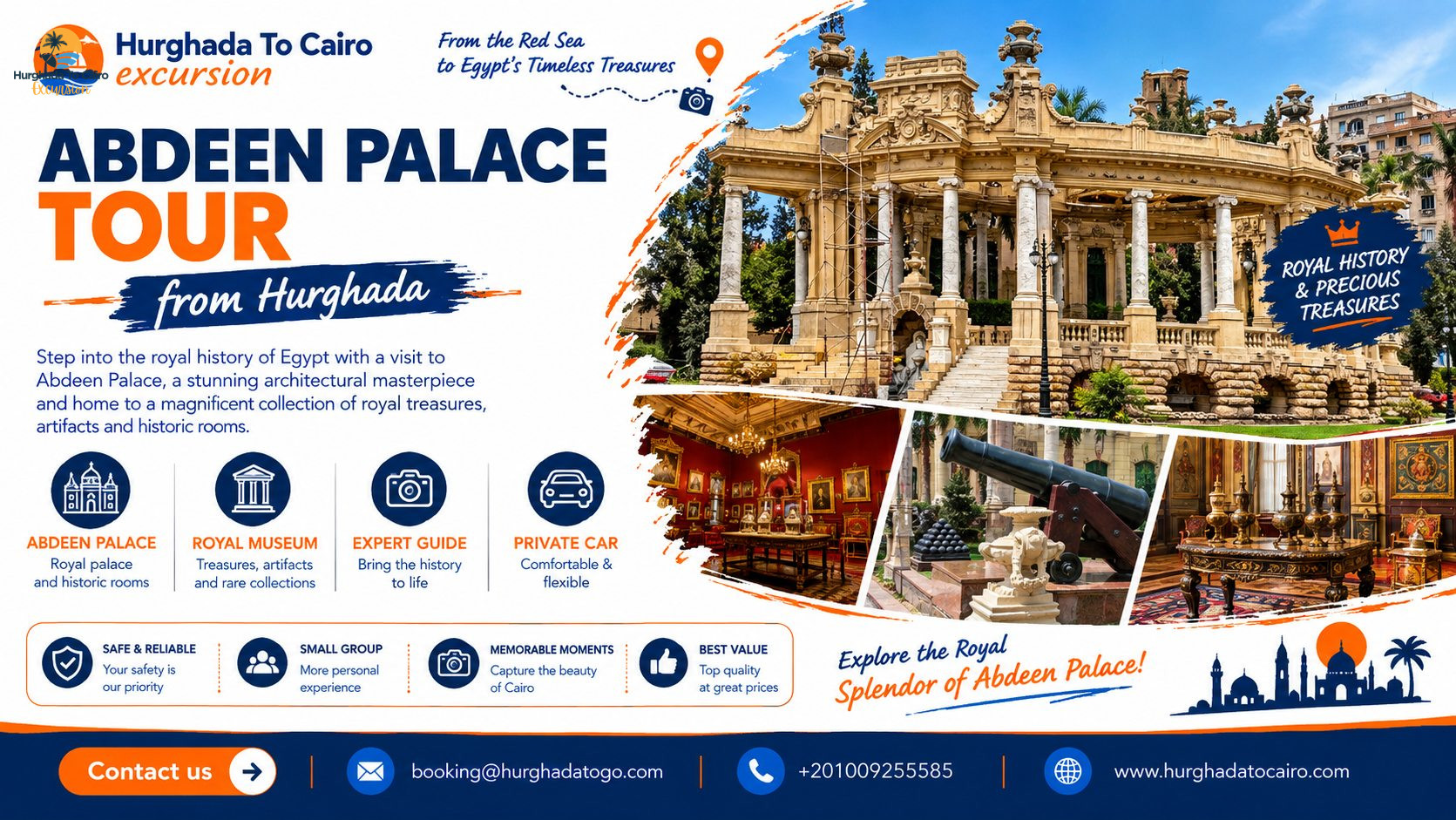
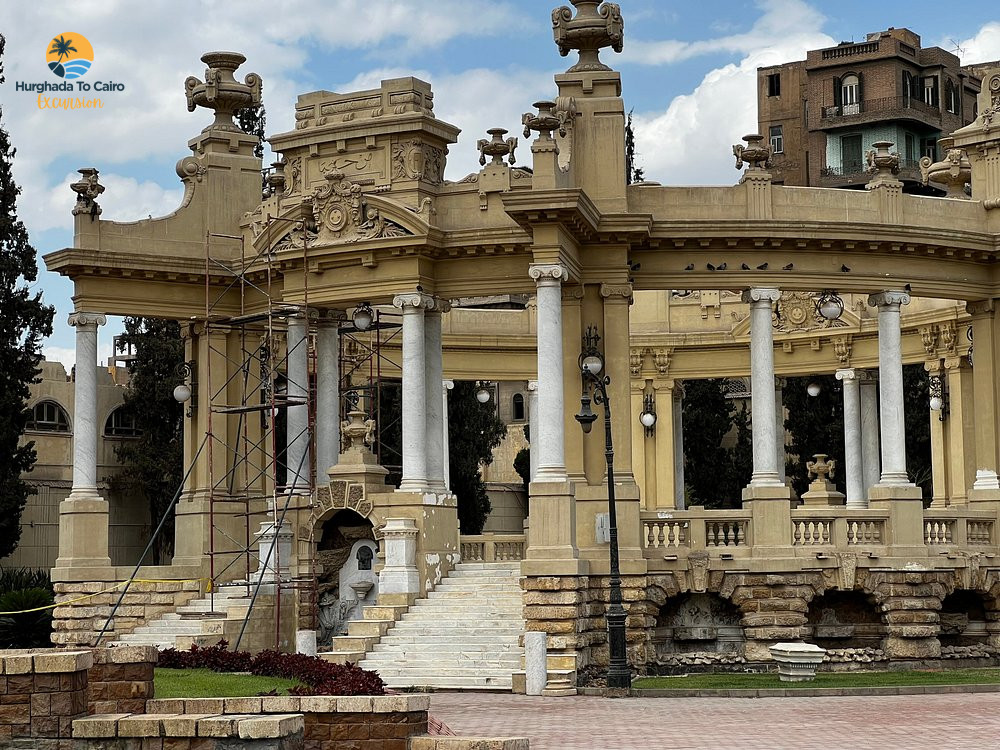
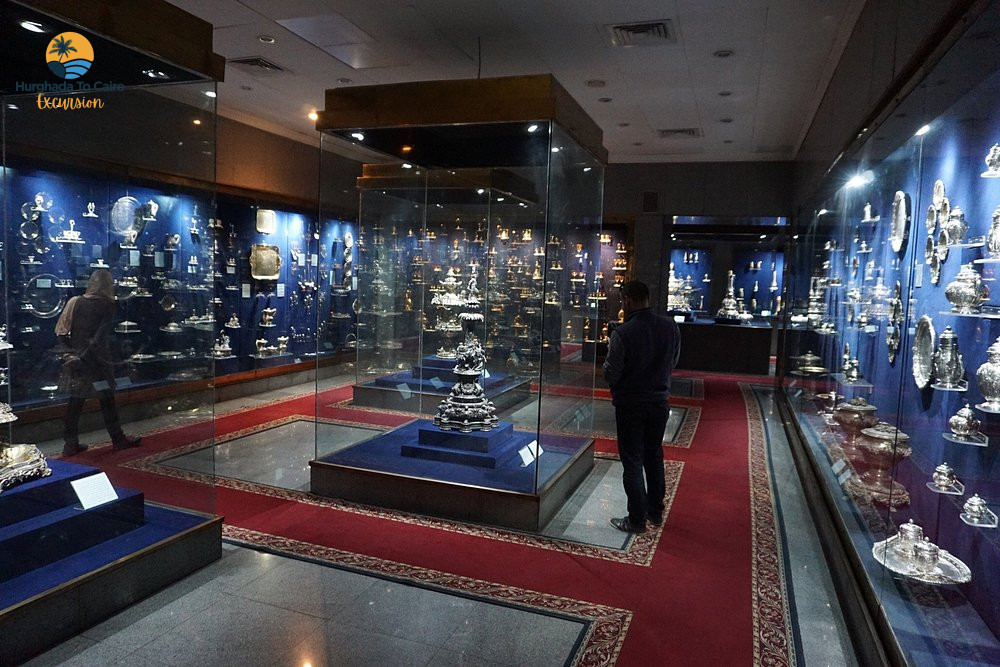
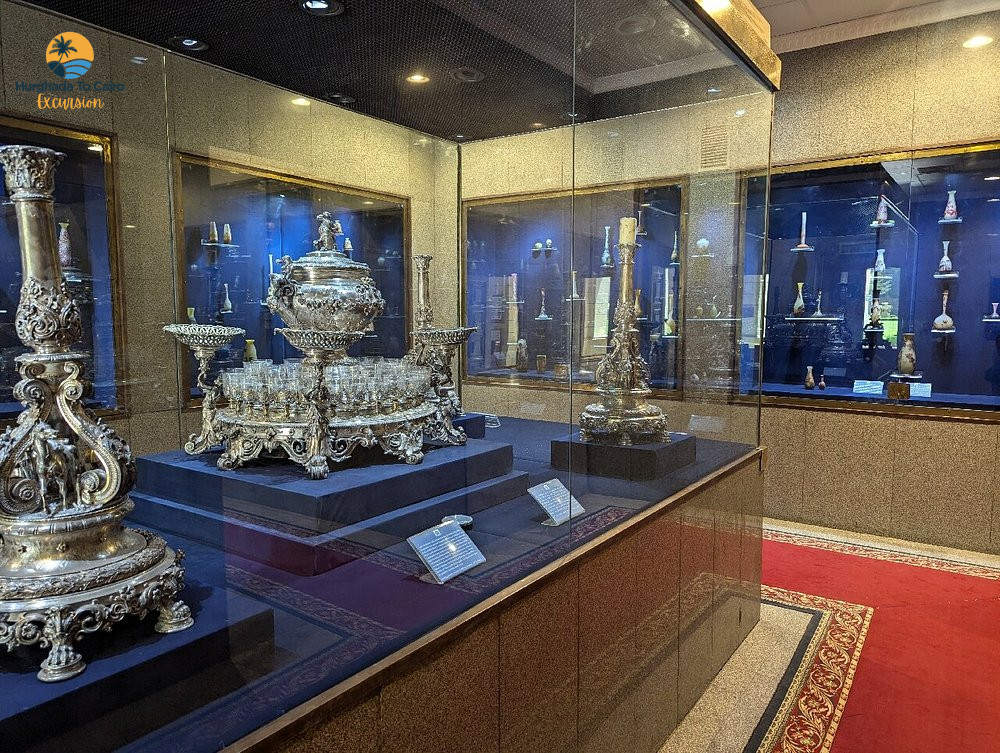
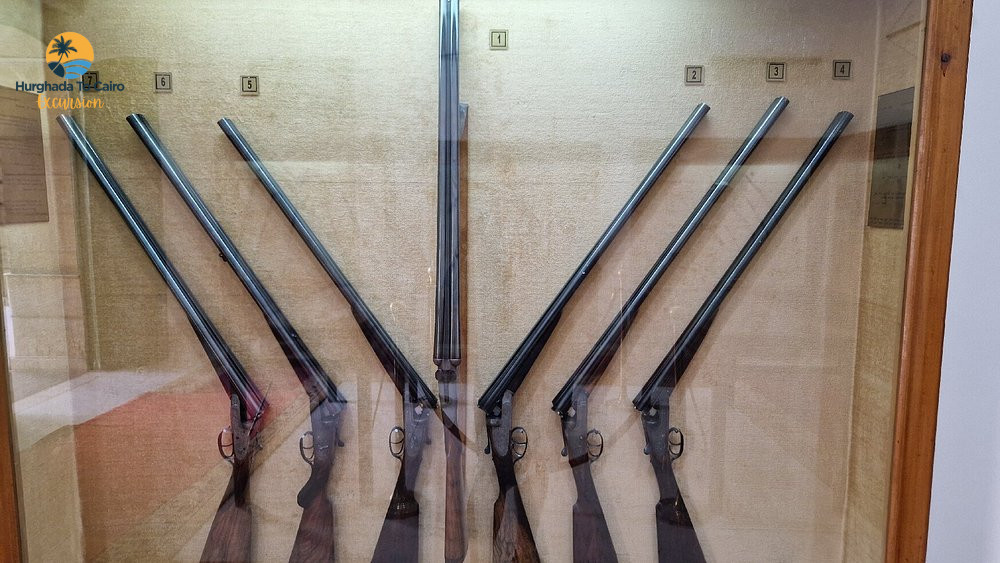
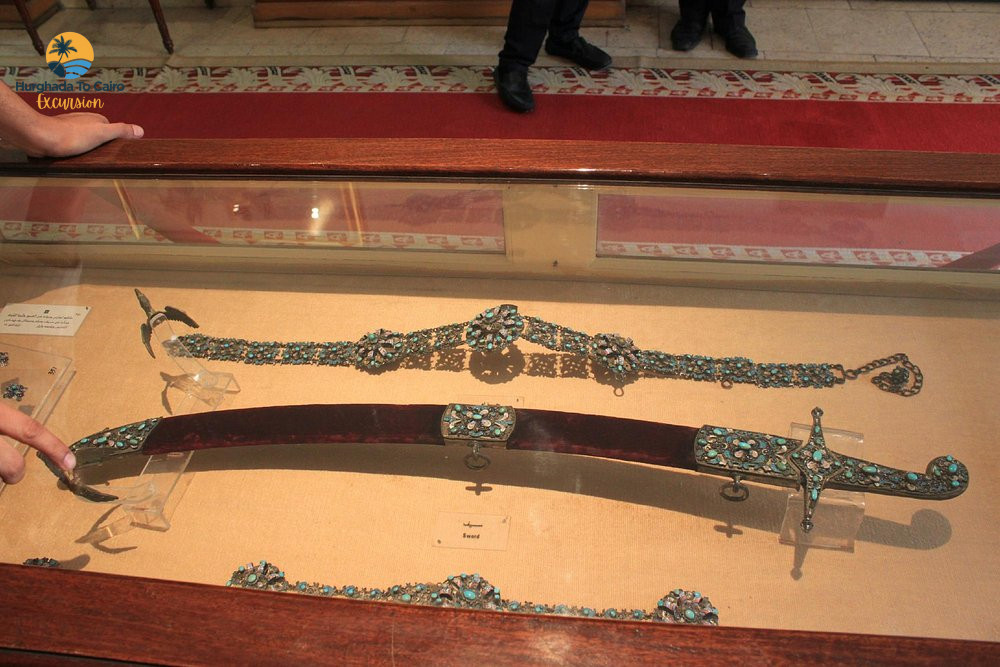
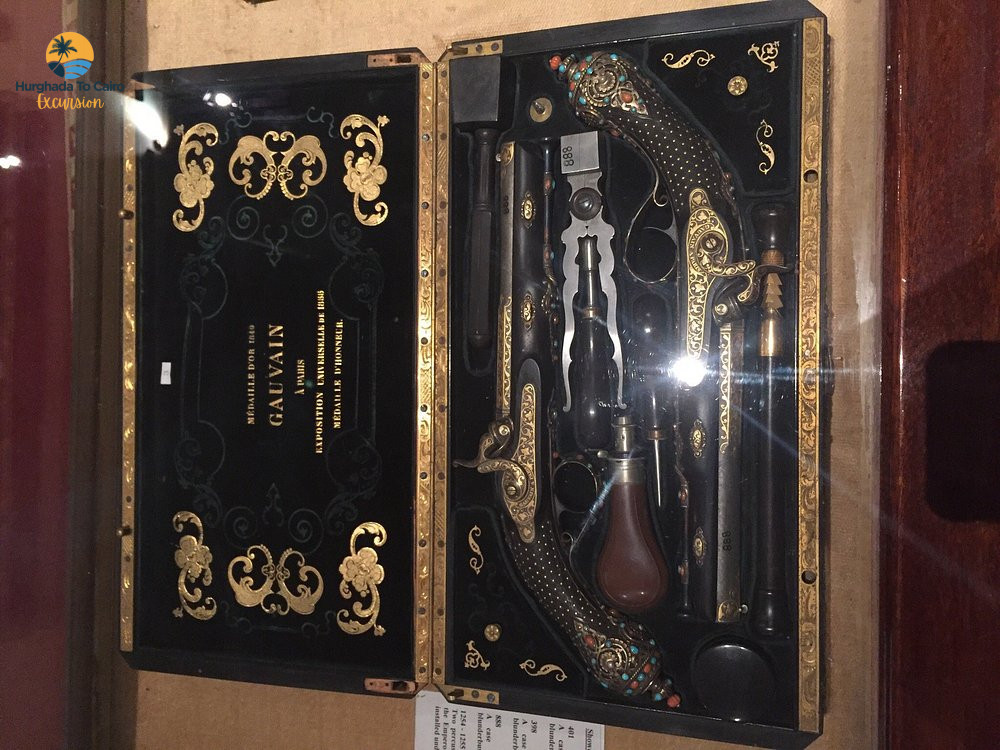
The Abdeen Palace tour from Hurghada takes you inside a genuinely extraordinary 500-room royal residence in the heart of Downtown Cairo — the seat of Egypt’s monarchy for eight decades, the birthplace of two kings, and the site where the modern Egyptian monarchy came to its end in 1952. Several floors are now open to the public as a museum complex, displaying royal weaponry, silver, decorations, and historical documents. This tour is built specifically around the palace’s own museums and royal history, set within its Downtown Cairo context — not a broader Cairo museum circuit.
📑 Table of Contents
Construction & Architecture
Khedive Ismail Pasha commissioned Abdeen Palace in 1863, intending it as a deliberate architectural and political statement: a modern, European-style seat of government to replace the medieval Cairo Citadel, from which Egypt had been ruled since Salah ad-Din established it in the 12th century. French architect Léon Rousseau designed the palace, and construction took roughly a decade, reaching completion in 1874. The scale was genuinely ambitious — 25 acres of grounds and some 500 rooms, with construction costs reported at 100,000 gold pounds and furnishing costs reaching a further 750,000 gold pounds, reflecting Ismail’s determination to present Egypt as a modern, cosmopolitan power on the world stage, not least around the high-profile international celebrations marking the opening of the Suez Canal in 1869.
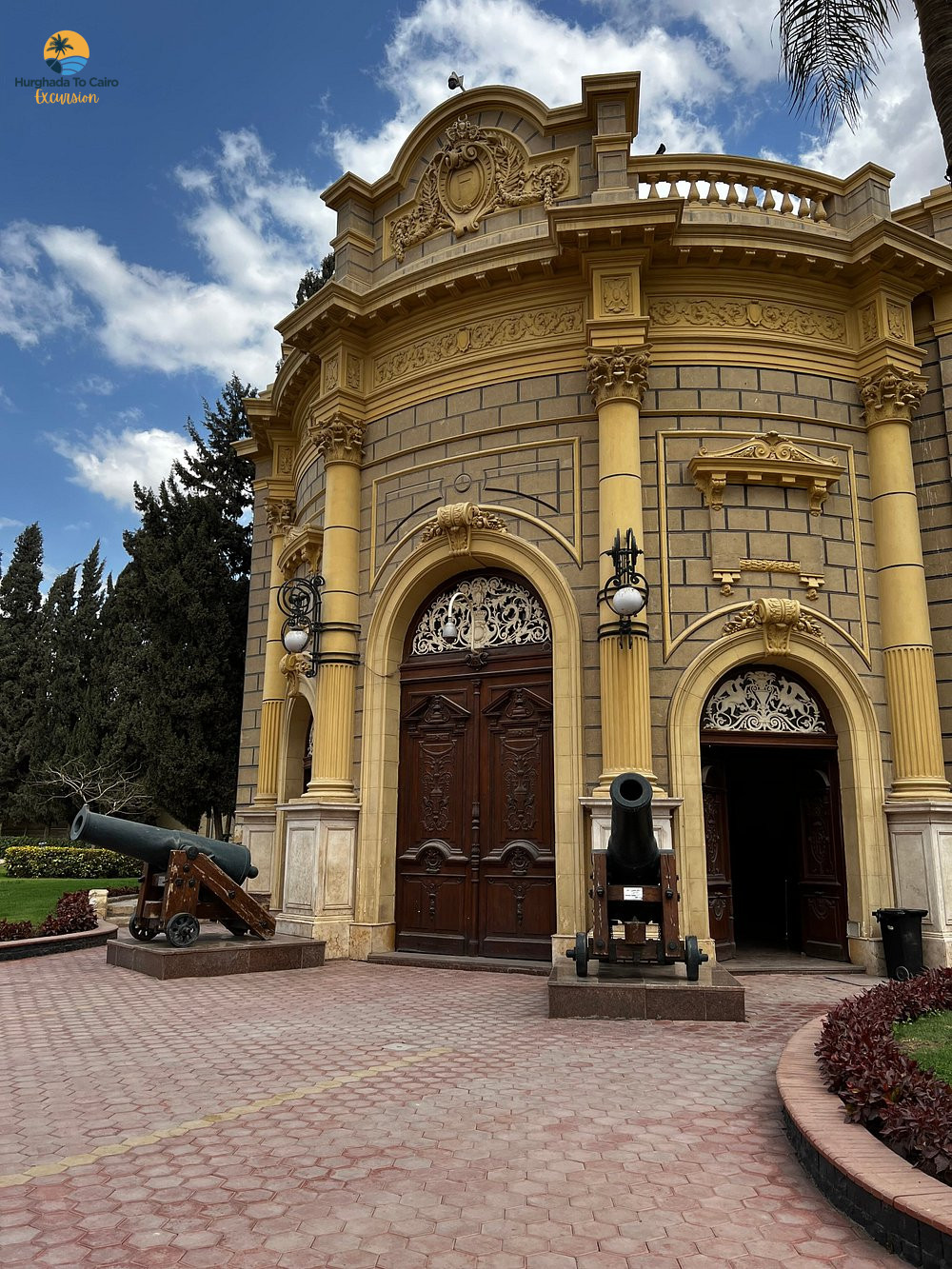
Architecturally, the palace blends European Renaissance, Ottoman, Rococo, and Islamic Oriental influences, organised into two principal sections: the Salamlik, the grand public and ceremonial reception wing, and the Haremlik, the private family quarters. A Byzantine-style throne room was added in the 1930s. Ismail formally relocated the seat of government to Abdeen in 1872, and the palace served as Egypt’s primary royal residence continuously from that point until the monarchy’s end eighty years later.
Royal History — From Ismail to Farouk
Across nearly eight decades as Egypt’s royal residence, Abdeen Palace witnessed the country’s modern history unfold within its walls. King Farouk I was born at Abdeen on 11 February 1920, and his own son, King Fuad II, was born there on 16 January 1952 — just months before the monarchy’s collapse. The palace was also the setting for one of the more dramatic episodes of Egypt’s wartime history: the 1942 Abdeen Palace Incident, in which British forces surrounded the palace and pressured Farouk to appoint a specific prime minister, narrowly avoiding a forced abdication a full decade before the monarchy’s actual end.
The End of the Monarchy, 1952
On 26 July 1952, following the Free Officers Movement‘s revolution, King Farouk I signed his abdication at Abdeen Palace, ending 84 years of the Muhammad Ali dynasty’s rule and 138 years of monarchy in Egypt. His infant son briefly succeeded him as King Fuad II, a largely symbolic reign lasting less than a year before Egypt was formally declared a republic. The palace was subsequently nationalised, repurposed initially as government offices, and — following restoration after the damaging 1992 earthquake — reopened as a public museum complex in 1998, while continuing to serve, as it does today, as a venue where the Egyptian president receives visiting heads of state.
The Palace Museums
The palace’s lower floors house several distinct museum collections, each offering a different lens on Egypt’s royal and modern history:
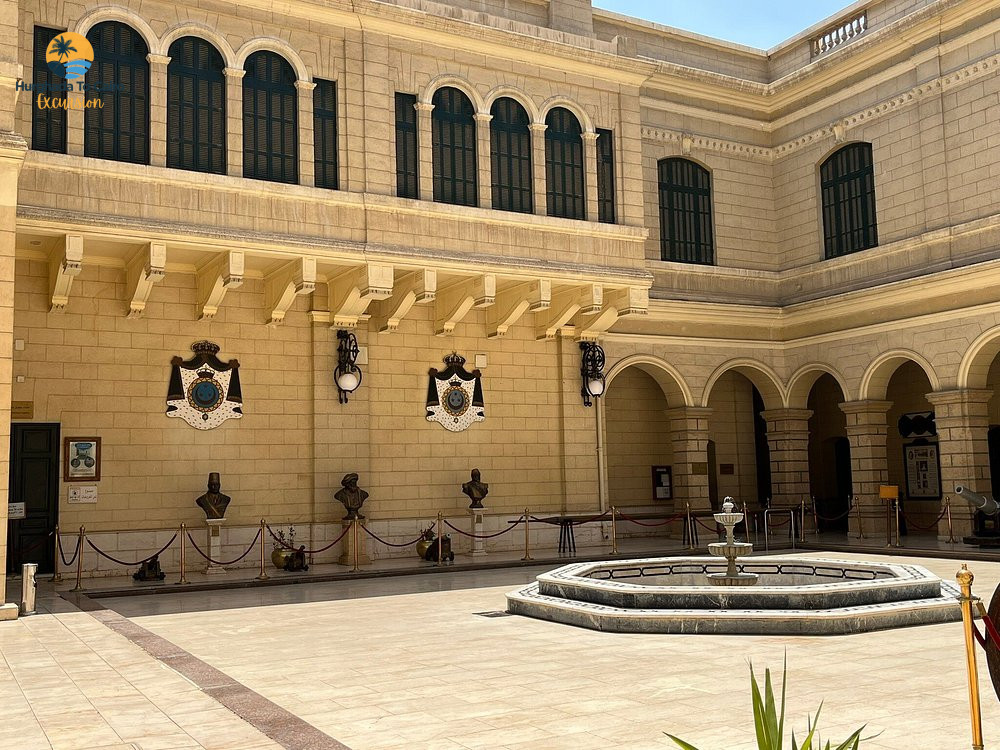
At the centre of the museum complex sits a genuinely striking fountain courtyard, surrounded by busts of three figures who defined Egypt’s modern royal era: Muhammad Ali Pasha, Khedive Ismail, and King Fuad I — a fitting visual summary of the dynasty whose story the palace tells.



Downtown Cairo Context
Abdeen Palace sits on Al-Qasr Al-Aini Street, within the Abdeen district of Downtown Cairo — an area named after Abdeen Bey, one of Muhammad Ali Pasha’s army commanders. The neighbourhood surrounding the palace reflects the same late-19th and early-20th century European-influenced urban planning that shaped much of Downtown Cairo under Khedive Ismail’s broader modernisation vision, offering a genuine sense of the wider historical setting the palace was built to anchor.
10 Highlights of Your Tour
Full Day Itinerary — Hour by Hour
Enquire about your Abdeen Palace tour from Hurghada — eight decades of royal history, told inside the very rooms where it happened.
What This Tour Deliberately Does Not Include
This tour is deliberately centred on Abdeen Palace, its museums, and its immediate Downtown Cairo setting. It does not include the Egyptian Museum in Tahrir Square, the Grand Egyptian Museum, the Pyramids, or a general Old Cairo sightseeing circuit — all excellent, but genuinely separate experiences we offer as their own dedicated tours. Keeping this itinerary focused purely on Abdeen’s royal history and museum collections is what allows the depth this remarkable site deserves.
Accessibility & Practical Notes
As a functioning presidential venue still used for official state receptions, security screening at Abdeen Palace is more thorough than at a typical museum — a routine, standard process rather than a genuine obstacle, but worth allowing extra time for. The museum floors are generally accessible, though some historic sections retain original stairs and thresholds. Contact us at booking with specific mobility needs so we can advise honestly on your visit.
What to Pack
10 Insider Tips
Tip 2 — Ask your guide to connect the museum objects to specific royal figures. The collection becomes far more meaningful when tied to named individuals and events.
Tip 3 — Take time with the fountain courtyard’s three busts. A genuinely concise visual summary of the entire dynasty’s story.
Tip 4 — Ask about the 1942 Abdeen Palace Incident. A genuinely dramatic episode that predates the monarchy’s actual end by a full decade.
Tip 5 — Dress smartly, given the palace’s continued official function. A slightly more polished appearance than typical sightseeing wear.
Tip 6 — Consider this tour if you’ve already visited the standard Cairo museum circuit. A genuinely different, more intimate angle on Egypt’s modern political history.
Tip 7 — Sleep during parts of the long drive. The 5.5-6 hour journey each way is easier managed this way.
Tip 8 — Ask your guide about the palace’s continued modern-day use. A genuinely rare example of a living, working royal-era building still hosting official state functions.
Tip 9 — Take the short Downtown Cairo streetscape walk seriously. It genuinely contextualises the palace’s original urban setting.
Tip 10 — Approach the 1952 story with genuine curiosity. Standing where the modern Egyptian monarchy actually ended is a genuinely powerful historical moment.
Frequently Asked Questions
Enquire About Your Abdeen Palace Tour Today
Eight decades of Egyptian royal history, told inside the very palace where it unfolded — a genuinely focused, private cultural itinerary. Free cancellation up to 24 hours before departure.
🔗 Explore more from Hurghada to Cairo:
All Cairo Trips from Hurghada
Baron Empain Palace Tour from Hurghada