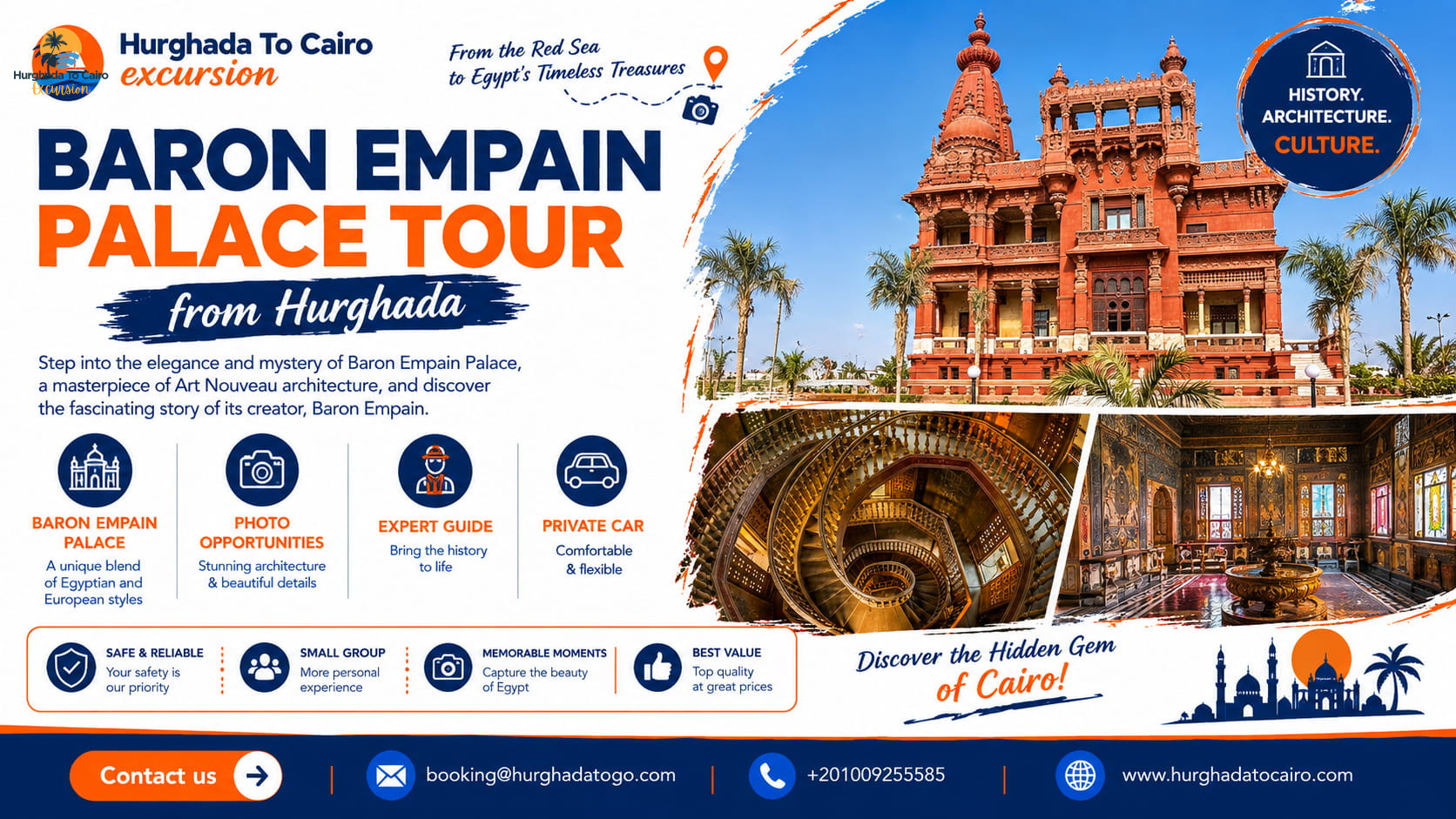
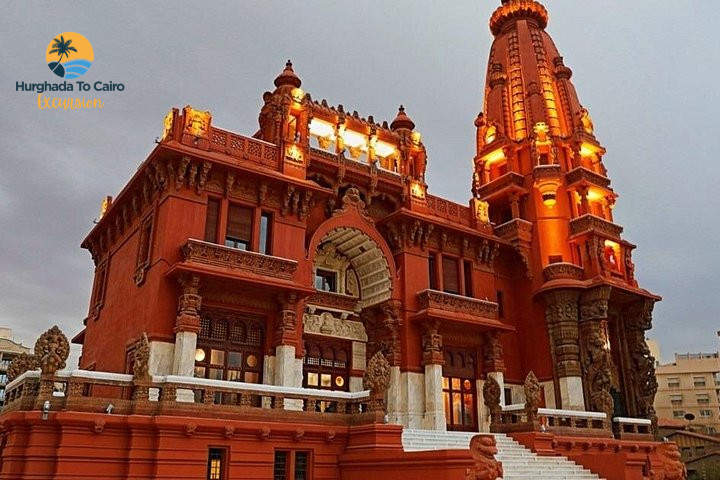
The Baron Empain Palace tour from Hurghada takes you to one of the strangest and most visually extraordinary buildings anywhere in Egypt — a Hindu-Khmer-inspired mansion rising unexpectedly from the streets of Heliopolis, built by the Belgian industrialist who founded this entire Cairo suburb. Restored after decades of abandonment and reopened as a public museum in 2020, the palace is a genuinely unique architectural detour from Egypt’s Pharaonic and Islamic heritage — and this tour keeps its focus exactly there, on the palace, its founder’s vision, and the surrounding district he built, not a broader sweep of general Cairo sightseeing.
📑 Table of Contents
The History of Baron Empain Palace
Baron Édouard Louis Joseph Empain was a Belgian engineer and industrialist who built his fortune constructing railways across Europe and beyond. In the early 1900s, he set his sights on Egypt, founding the Heliopolis Company to develop a spacious, modern garden suburb northeast of central Cairo — a deliberate escape from the congestion of the old city. At the heart of this new district, between 1907 and 1911, he built his own residence: what is known today as the Baron Empain Palace.
The palace was declared a national monument in 1993. In 2005, Egypt’s Ministry of Housing acquired the property, compensating the Empain family with alternative land, and entrusted the building to the Ministry of Culture. Decades of neglect had by then taken a genuine toll, and the site had accumulated a reputation for hauntings and unexplained events among local residents. In 2017, the Egyptian government began a comprehensive $10.9 million restoration, drawing on original blueprints, historic photographs, and teams of Egyptian and Belgian specialists to meticulously repair the structure and its intricate carvings. The project was completed in 2020, and the palace reopened to the public on 30 June 2020 as a museum dedicated to Heliopolis’s history and the Baron’s vision.
The Architecture — A Hindu-Khmer Fusion
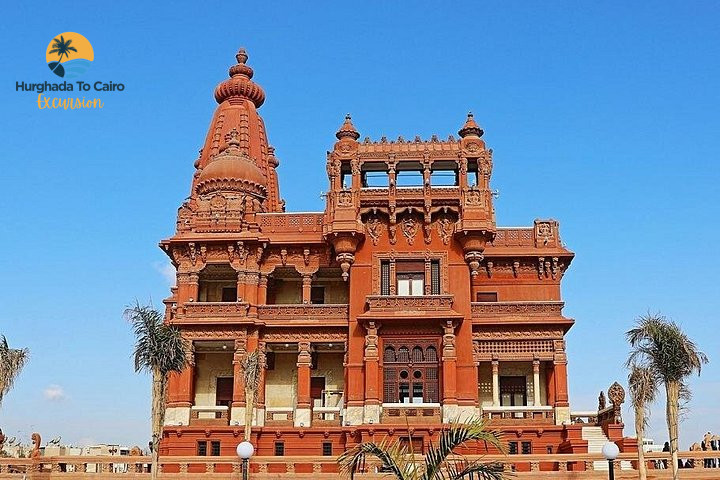
Baron Empain commissioned French architect Alexandre Marcel, a leading figure of the French Orientalist movement, to design a residence unlike anything else in Egypt. Marcel drew his inspiration from the Hindu temples of Angkor Wat in Cambodia and the temple architecture of Orissa and Khajuraho in India, resulting in a genuinely unique fusion sometimes referred to locally as Le Palais Hindou — “The Hindu Palace.” Georges-Louis Claude designed the interior decoration.
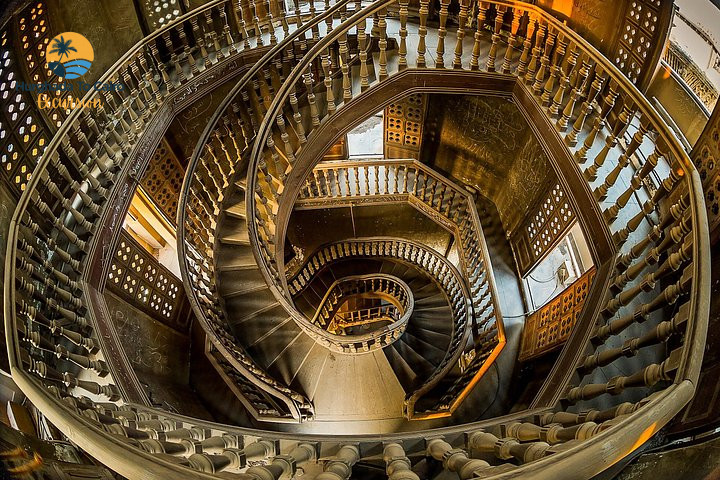
The palace’s exterior is covered in an extraordinary array of sculpted figures: elephants, serpents (nagas), dragon-like guardian creatures, Indian dancers, and depictions of Shiva, Buddha, and Krishna, executed in a style drawing on both Hindu and Buddhist temple traditions across South and Southeast Asia. Constructed using pioneering reinforced-concrete (Hennebique) techniques — a genuine engineering novelty for Egypt at the time — the roughly 12,500-square-metre residence features a distinctive spiral staircase winding up through a central tower to a rooftop terrace, from which the building’s occupants could once take in panoramic views across the surrounding desert and the new district taking shape below.
The Ghost Stories & the Restoration
For decades before its restoration, the abandoned palace accumulated a genuinely rich body of local legend — stories of hauntings, unexplained accidents, and hidden tunnels beneath the grounds, passed down among Heliopolis residents as the building slowly deteriorated. Following the completed 2017–2020 restoration, Egyptian media widely described the project as having “laid these myths and legends to rest,” restoring the palace’s original grandeur and transforming a site of local mystery into a genuinely accessible cultural landmark. Your guide is happy to share these stories alongside the verified architectural and historical facts — part of what makes a visit here genuinely memorable.
Heliopolis — The Baron’s Vision
Beyond his own residence, Baron Empain’s larger legacy is the district of Heliopolis itself — designed by Belgian architect Ernest Jaspar in a striking synthesis of Islamic, European, Persian, and Moorish architectural styles, laid out along broad, arcaded avenues equipped with all the modern conveniences of the era. Walking or driving through Heliopolis today, you’ll see this distinctive architectural language on nearly every street — a genuinely different visual world from the palace’s own Hindu-Khmer style, and worth understanding as the broader vision the palace was originally built to anchor.
Nearby Heliopolis Highlights
10 Highlights of Your Tour
Full Day Itinerary — Hour by Hour

Book your Baron Empain Palace tour from Hurghada — a Hindu-Khmer masterpiece rising from the streets of Cairo, restored and reopened after decades of legend.
What This Tour Deliberately Does Not Include
This tour is deliberately centred on Baron Empain Palace and its immediate Heliopolis surroundings. It does not include the Pyramids of Giza, the Egyptian Museum or GEM, Islamic Cairo, or Coptic Cairo — all wonderful destinations, but genuinely separate experiences with their own dedicated tours. Keeping this itinerary tightly focused on Heliopolis and its founder’s remarkable vision is what lets us give the palace itself the unhurried time and depth it deserves.
Accessibility & Practical Notes
Following its 2017–2020 restoration, the palace’s ground floor and main halls are generally accessible, though the spiral tower staircase to the rooftop terrace is narrow and not suitable for those with mobility concerns. Contact us at booking with specific needs so we can advise honestly on what’s realistic for your visit. Photography rules can vary, so confirm with your guide on arrival.
What to Pack
10 Insider Tips
Tip 2 — Climb the spiral tower if you’re comfortable with narrow stairs. The rooftop view is genuinely worth the effort.
Tip 3 — Look closely at the exterior sculptural details. Elephants, nagas, and Hindu deities carved with real precision — easy to walk past too quickly.
Tip 4 — Take a moment to appreciate Heliopolis’s own architecture beyond the palace. Ernest Jaspar’s garden-city vision is a genuinely striking backdrop.
Tip 5 — Ask about the connection between the palace, the Basilica, and the Heliopolis Palace Hotel. All three carry Alexandre Marcel’s architectural signature.
Tip 6 — This tour is an excellent choice for a second or third Egypt trip. A genuinely different architectural world from the standard Pharaonic and Islamic circuits.
Tip 7 — Sleep during parts of the long drive. The 5.5-6 hour journey each way is easier managed this way.
Tip 8 — Confirm current photography rules with your guide on arrival. These can vary by area within the museum.
Tip 9 — Bring genuine curiosity about early 20th-century colonial-era architecture. It adds real depth to appreciating what makes this building so unusual.
Tip 10 — Enjoy the genuinely calm, uncrowded pace here. One of Egypt’s most visually extraordinary buildings, without the crowds of the headline sites.
Real Reviews — Baron Empain Palace Tour from Hurghada
“Genuinely nothing like anywhere else we visited in Egypt — walking up to a Hindu-style temple in the middle of Cairo was surreal. The ghost story context our guide gave made it even more memorable.”
“As a Belgian, seeing what Baron Empain built here was genuinely moving. The restoration is beautifully done, and Heliopolis itself was a lovely surprise we hadn’t expected.”
Frequently Asked Questions
Book Your Baron Empain Palace Tour Today
A Hindu-Khmer masterpiece in the heart of Cairo, restored and reopened after decades of legend. Free cancellation up to 24 hours before departure.
🔗 Explore more from Hurghada to Cairo:
All Cairo Trips from Hurghada
Gayer-Anderson Museum & Ibn Tulun Tour from Hurghada