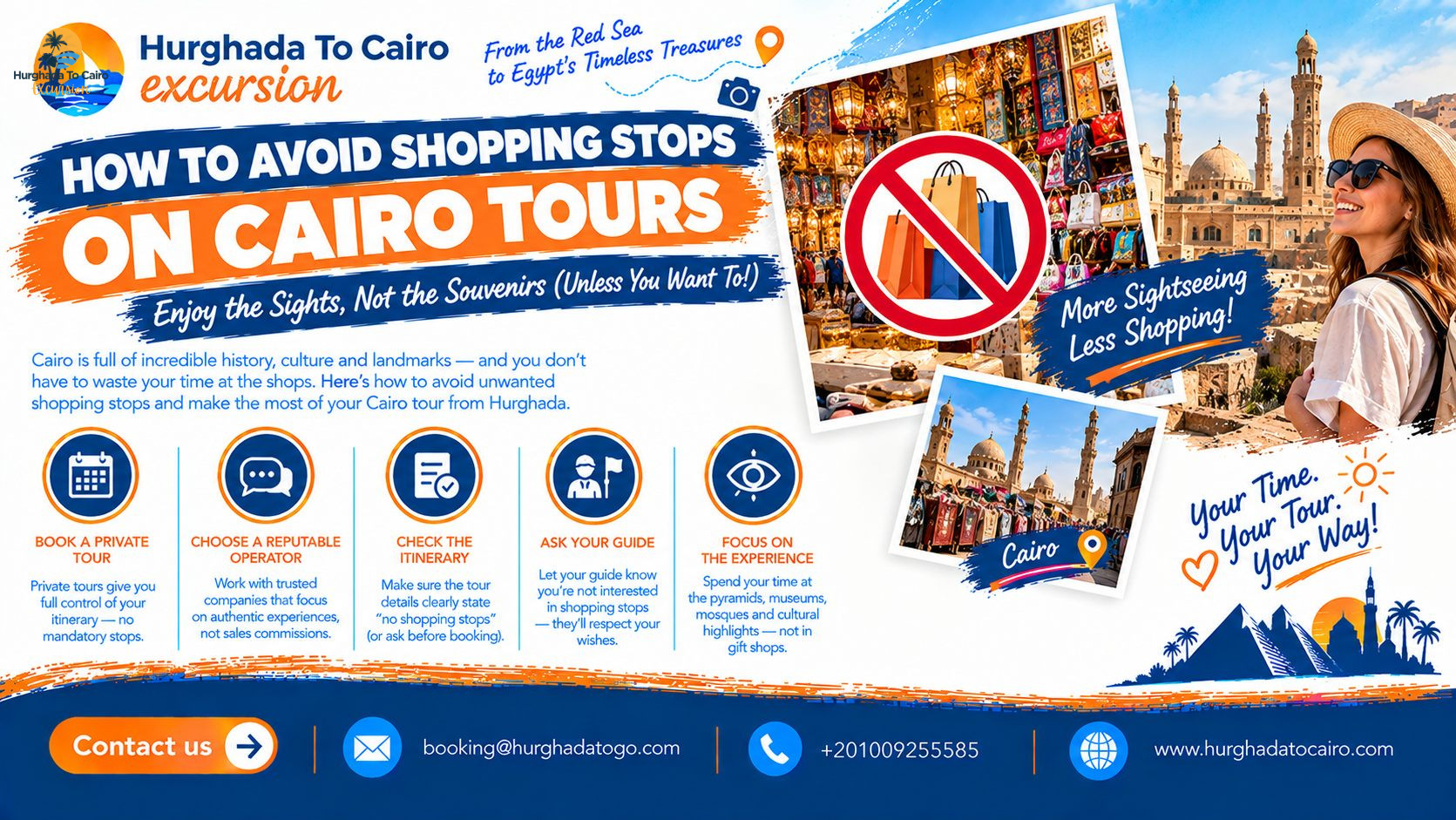
If you’ve read reviews of Cairo day tours, you’ve almost certainly come across complaints about unexpected shopping stops — detours that eat into sightseeing time and apply genuine sales pressure. This guide explains exactly what these stops are, how to spot them before you book, and what questions to ask so you know precisely what you’re signing up for.
What Shopping Stops Actually Are
A shopping stop is a detour to a specific partner shop — most commonly a papyrus institute, a perfume or essential oils outlet, a cotton or galabeya shop, or an alabaster/jewellery workshop — built into the tour itinerary not because it adds meaningful cultural content, but because the tour operator, guide, or driver receives a commission on anything purchased there. These stops are genuinely common across the budget end of the Cairo tour market, where a low advertised tour price is subsidised by commission income from these detours rather than the ticket price alone.
How to Spot Them Before You Book
The itinerary’s own wording often gives it away, if you read it closely. Watch for stops described vaguely as a “cultural experience,” “local demonstration,” “factory visit,” or “see how it’s made” without naming a specific historical or publicly recognised site. A stop phrased as “quick,” “brief,” or tucked in between two major sites with no real explanation of what it actually is, is also worth questioning directly before you commit.
Private Tours vs Group Tours
Low-cost group bus tours are genuinely more prone to forced shopping stops, since the business model often relies on commission income to keep the advertised price competitive. A genuinely private tour — your own vehicle and guide, not shared with other paying passengers — removes the group dynamic that makes it easy for an operator to insert an “optional” stop everyone ends up attending anyway. That said, booking private alone doesn’t automatically guarantee no shopping stops; it still comes down to the specific operator’s policy, which is why asking directly matters regardless of tour type.
Questions to Ask Before Booking
“Does this itinerary include any shop, factory, or ‘demonstration’ visits?” — a direct question that forces a direct answer, rather than relying on itinerary wording alone.
“Can you confirm in writing that there are no commission-based stops on this tour?” — getting this in writing, by email or chat, gives you something concrete to reference if the day doesn’t match what was promised.
“Does the guide or driver earn commission from any stop on this itinerary?” — a question that cuts straight to the financial incentive behind the practice.
“What happens if I decline to enter a stop during the tour?” — worth asking in advance, since a reputable operator should have no issue with you skipping any stop entirely.
Why “No Shopping Stops” Matters
Every tour we run follows a genuine zero shopping stops guarantee — the itinerary you read before booking is exactly what happens on the day, with no commission-driven detours added once you’re on the road. This isn’t a marketing phrase layered on top of the same old model; it reflects how our tours are actually priced and structured, with transparent inclusions and nothing hidden behind vague itinerary wording.
Frequently Asked Questions
Every Tour We Run Guarantees Zero Shopping Stops
What you read in the itinerary is exactly what happens on the day – no commission detours, no sales pressure, ever.